Thursday, March 26, 2015

10 years of New Doctor Who - A pictorial history

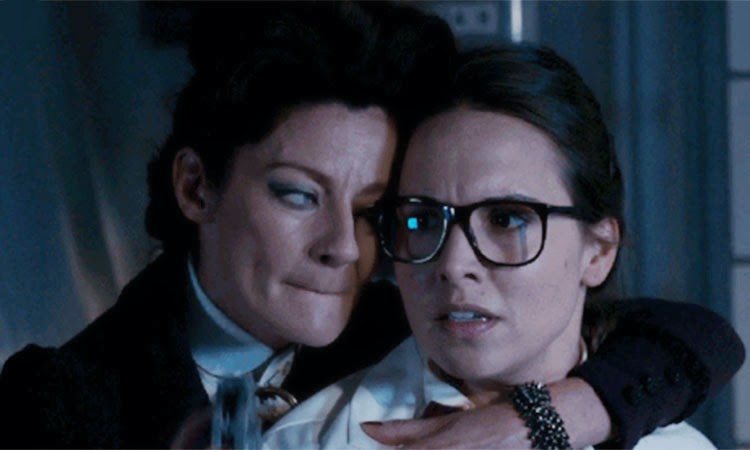
In which I have no time to write a lengthy piece on the 10th anniversary of the New Series (and everyone is re-watching "Rose" anyway), so decide to just post an image from every story in celebration:

Rose

The End Of The World
The Unquiet Dead

Aliens of London
 

World War Three 

Dalek

Father's Day

The Empty Child

The Doctor Dances

Boom Town 

Bad Wolf

The Parting Of The Ways

The Christmas Invasion

New Earth

Tooth & Claw

School Reunion

The Girl In The Fireplace

Rise Of The Cybermen 

The Age Of Steel

 The Idiot's Lantern

The Impossible Planet

The Satan Pit

Love And Monsters

Army Of Ghosts

Doomsday

The Runaway Bride

Smith And Jones

The Shakespeare Code

Gridlock

Daleks In Manhattan

Evolution Of The Daleks

The Lazarus Experiment

42

Human Nature

Family Of Blood

Blink

Utopia

The Sound Of Drums

Last Of The Timelords

Voyage Of The Damned

Partners In Crime

The Fires Of Pompeii

Planet Of The Ood

The Sontaran Strategem

The Poison Sky

The Doctor's Daughter

The Unicorn And The Wasp

 Silence In The Library

Forest Of The Dead

Midnight

Turn Left

The Stolen Earth

Journey's End

The Next Doctor

Planet Of The Dead

The Waters Of Mars

The End Of Time Part 1

The End Of Time Part 2

The Eleventh Hour

The Beast Below

Victory Of The Daleks

The Time Of Angels

 Flesh And Stone

 Vampires In Venice

Amy's Choice 

The Hungry Earth

Cold Blood 

Vincent And The Doctor 

The Lodger

The Pandorica Opens

The Big Bang 

A Christmas Carol

The Impossible Astronaut 

The Day Of The Moon

Curse Of The Black Spot 

The Doctor'sWife 

The Rebel Flesh 

The Almost People 

A Good Man Goes To War 

Let's Kill Hitler 

Night Terrors 

The Girl Who Waited 

The God Complex

Closing Time 

 The Wedding Of River Song

The Doctor, The Widow And The Wardrobe

Asylum Of The Daleks

Dinosaurs On A Spaceship 

A Town Called Mercy

The Power Of Three 

The Angels Take Manhattan 

The Snowmen 

The Bells Of Saint John 

The Rings Of Akhaten 

Cold War 

Hide 

Journey To The Centre Of The TARDIS 

The Crimson Horror 

Nightmare In Silver 

The Name Of The Doctor 

The Day Of The Doctor 

The Time Of The Doctor 

Deep Breath 

Into The Dalek 

Robot Of Sherwood 

Listen

Time Heist 
T
The Caretaker 

Kill The Moon 

Mummy On The Orient Express 

Flatline 

In The Forest Of The Night 

Dark Water 

Death In Heaven 

Last Christmas 


Wow what a journey the last ten years has been!

It's only fitting that I end with one final picture of the four actors who have brought our favourite Time Lord to life this past decade. Happy 10th birthday Doctor.


Thursday, March 19, 2015

Collector's Dream 1 - Judge Dredd: The Mega-Collection

This is the part of the blog where I want to chat about comics old and new and everything in between. Anything and everything to do with my lifelong obsession with the brilliance that is sequential art.

By the way, the origin of the "Collector's Dream" name is a *long* story - involving (amongst other things):  three comics fans, Gary Spencer Millidge, a shop in Southend-on-Sea, a Commodore 64, Titan Distributors, an awful lot of Copydex and a guest appearance from Warren Ellis. One day I'll bore you with the whole complicated tale...

Anyway, first up - the brand new collection of Judge Dredd strips.

 
2000 AD has been a part of my life since I was ten years old.

I vividly remember buying that first "Prog" back in early 1977 and I haven't missed a single issue since. 38 years worth of collected issues are still the most important thing in my comics collection.

2000 AD was (and continues to be)  the breeding ground for the best of British comics talent. Those high-profile creators you love with their hugely successful and influential US comics? 99% of them started out writing or drawing for 2000 AD.

Obviously with a weekly publication schedule there have been a huge number of important characters and strips - and I will perhaps return to some of these at a later date. But striding across them all is the most important British comics character since Dan Dare in the 1950's - Judge Dredd.

Dredd first appeared in 2000 AD in Prog 2 in 1977 and has missed only a handful ever since. That's over 1,700 issues, plus 300+ monthly "Judge Dredd Megazine" comics. When you add in annuals, specials and assorted other appearances, it's a vast body of work.

Quick potted history for those who may not know:

Judge Joseph Dredd is an officer of the law in the future city of Mega-City One, which covers the eastern coast of the USA. A series of atomic wars turned much of the rest of the planet into a radioactive wasteland.

Most of Mega-City One's millions of citizens live in gigantic "City Blocks" where crime is rampant, unemployment is the norm and addiction to the latest drug, fashion or idiotic craze is an everyday occurrence. Judges have the power of "judge, jury and executioner" over the perpetrators ("perps") of any crime, ranging from littering and jaywalking to homicidal murder and alien trafficking. Dredd is the most infamous (and one of the longest serving) of them all. The Law is everything to him. He's not known as "Old Stoney Face" for nothing.

In between everyday cases (if a marauding alien bounty hunter can be considered ordinary) Dredd has over the years faced a number of major threats including a robot rebellion, corrupt Judges seizing power, the alien super-fiend "Judge Death", a war with East-Meg One, democracy terrorists and even a zombie invasion. Many of these "mega-epics" have resulted in the destruction of vast swathes of Mega-City One and the loss of millions of lives.

What makes Dredd even more special though is that a) the strip progresses pretty much in real time and b) it's been mainly written by one man over it's entire history - John Wagner.

Of course the Dredd stories have been reprinted many times before - and I bought most of them, despite already owning the originals. Notably, from the 1980's there were the slim Titan Books volumes and the exceptional colour US format Eagle comics  - both with fabulous new covers. Then there were the not-so-good Quality versions:


In more recent year's there have been the Complete Case File "omnibus" editions and the excellent range of graphic novels from 2000 AD owners Rebellion:


Personally I'd not bothered with these later editions due to space / financial constraints at the time.

So what made this set of reprints from Hachette / Rebellion worth a look and persuaded me to part with my money? Part work collections are often a mixed bag. (Although a collection of Dredd strips is far more interesting than a 150-part "build your own Millennium Falcon from scrappy bits of plastic").

Well, published fortnightly, the 80-issue Judge Dredd Mega Collection is meant to be something slightly different. Instead of printing everything in publication order, the series is structured around key "themes". All the classic Dredd stories and Mega-epics will be there, but alongside them will be smaller tales dealing with similar subject matter. In addition there will be collections of stories from the various Dredd spin-offs - Anderson Psi Division, Devlin Waugh, Simping Detective, etc. The sales blurb describes the series as the "...definitive collection of Judge Dredd and the world he occupies...".

I'll admit that I did have to think long and hard before subscribing to this. Haven't I bought a lot of this (several times) before? Don't I have the original issues sitting there anytime I want to pick one up? However, in the end there were several key factors that swung it for me:

a) I don't have collected editions of a lot of the "expanded Dredd universe" stories.

b) The books are nice sturdy hardback editions (I remember the Titan versions and the binding glue that only lasted a few weeks before you ended up with pages falling out).

c) Each volume will feature previously unseen concept art, sketches and bonus features.

d) When complete the spines will form a single specially commissioned new image.

If the first three reasons were not enough, the spanning image was the clincher. I'm a real sucker for that kind of thing. (By the way, subscribing does get you a number of free gifts - mugs, coasters, bookends, etc. I'm not really bothered by those and they didn't influence my decision).

So far there have been four volumes published: "America", "Mechanismo", "The Apocalypse War" and "Origins"  - with the fifth: "Anderson: Shamballa" available only to subscribers as yet.


The first thing that stands out is the cover design. This minimalist approach of black and white with a hint of red is really striking and I hope they continue it throughout the 80 issues. Some of the artwork (such as the Mechanismo cover) has been specially commissioned for the collection. It's a really bold design choice.

The volumes themselves are lovely and sturdy and run from 200 to 250 pages dependant on the stories contained. The spine has a big number for it's place in the collection along with a slice of the overarching image. Each issue has a timeline / story so far to bring you up to speed with where the story is set in the Dredd canon, along with a new introduction by 2000 AD editor (and current Tharg), Matt Smith (no not that one!).

It's worth mentioning that like many collections of this type, the 80 parts are not being published in order. Issue one *is* part 1, but issue two then jumps to part 24, issues three to part 36 and so on. It means that you have to get all 80 issues to fully experience that spine spanning image and the stories you may be longing to see released might be a long way down the line. I can see that it makes business sense, but it does seems to have confused a few people from reactions I have seen online.

Having said that, Hachette / Rebellion have obviously decided to start with a bang for these first few issues by collecting major pieces of Dredd lore.

"America" is often cited as the greatest Dredd story ever published (odd considering Dredd himself only appears in the background until the end). A tale of love, loss and terrorism against judicial oppression, it features stunning painted artwork from Colin MacNeil - who also provides the majority of the art for "Mechanismo", a series of stories about the introduction of robot judges.

"The Apocalypse War" was the first true mega-epic, depicting the devastating impact of an attack by the Sov East-Meg One. All 25 episodes were drawn by Dredd's co-creator - the peerless Carlos Ezquerra. Even 30 years later the effects of this story are still being felt in the strip. It's one of my personal favourites.

"Origins" is exactly what it says on the tin - a 23-parter telling the story of the last US president, Robert Booth, how he started the atomic wars and the Judges eventual rise to power. It took 30 years for this story to be written and it was worth the wait. Fittingly it is only Wagner and Ezquerra who could tell it.

Flipping through the books, the quality of the production is evident. The pages are crisp and white. The colours are vibrant and the artwork is beautifully reproduced. Well almost....

This is my one gripe with the series. It appears that with the older stories where only the centre spread was in colour, Hachette are just going to print everything in black and white. So the "Apocalypse War" edition perhaps loses some of its impact by omitting those 25+ colour sections.

I contacted Hachette directly about this and was told that the colour quality was too poor to be reprinted. I find that a bit strange as they were able to reprint one of the colour pages plus the covers in the extras section in the back. I suspect (and this is only a personal opinion) that the artwork files they are using are the same one's used by everyone else who has reprinted these stories before - and those were all in black and white too (the Eagle comics were an exception because the whole stories were recoloured). Indeed Rebellion are to publish their own special edition hardback of the Complete Case Files volume 1 in 2015 which will "include the addition of the famous colour centre spreads, restored to their former glory for the first time".

 It's a disappointing omission in an otherwise first-rate set of books. I am slightly concerned about how things will look when we get to some of the darker colouring on later centre spreads and how turning it to "greyscale" will turn out. Time will tell. However the lack of colour does not detract from the power of these stories.

One final thing to mention - the smell of the hardcovers. I personally *love* that new book smell when you first crack open the cover and these do not disappoint. A small thing but I guess I am easily pleased. Maybe it's the smell of concentrated Thrill-Power ?

So are these editions worth your investment? After all, the "omnibus" editions of much of 2000 AD's output is perhaps better value for money.

I would say yes there are. The production quality is top-notch and the hardbacks will stand the test of time. The extra material is interesting and diverse. The stories selected are well worth reading and later issues will collect some lesser known classics. If you are totally new to Dredd I think it's an brilliant place to start. If you are an existing aficionado then these still have great merit - this is an exemplary collection of one of comics most important and enduring characters.


Friday, March 13, 2015

"So much universe, and so little time". RIP Terry Pratchett


AT LAST, SIR TERRY, WE MUST WALK TOGETHER
“Terry took Death’s arm and followed him through the doors and on to the black desert under the endless night.”
“The End”.
 
With those final words Sir Terence David John Pratchett, OBE left  us with the same style and dignity that he had always shown throughout his too short life on this mortal coil.
 
It's fitting I guess that thousands of lines of text will now be written about a man whose career and huge body of work showed the enormous power of the written word - and how it can inspire, enlighten, educate and entertain millions across the world.
 
Far better people than I will be able to explain the huge impact Terry had on the literary world and the fantasy genre. Others will speak eloquently about his tireless campaigns for better understanding and support for sufferers of early onset Alzheimer's and for the right to die at a time and place of one's own choosing.

All I can do is offer my own personal memories.
 
I was lucky enough to meet the man himself several times at events and books signings. He was always kind, friendly and pleased to see you, with a boundless enthusiasm for his work and his fans.

Two moments stand out in my mind from the very early days, before he became mega famous.
 
The first time, my friend Neill and I were standing in line to get our books signed (I think Mort had just come out in paperback). This was the time when Josh Kirby was painting all the UK Discworld book covers. Other publishers were leaping on the "comic fantasy" bandwagon and in an attempt get some of the Pratchett readership had also commissioned Kirby to do the covers for the books by American author Craig Shaw Gardner.    
 
                                                           
Gardner's books were fantasy parodies similar to the first couple of Discworld novels (personally I think his "Cineverse Cycle" is much more original). Anyway as a bit of a joke, we took one of the Gardner books along to the signing.

Terry took it from Neill and turned it over in his hands. "Hmmmm..." he rumbled, then looked up at us with a big grin  - and wrote something in the book and signed it with his usual flourish (he had more time and less signatures to do in those days). After a brief exchange of how much we liked his books and what was he working on next, we moved along and let others have their turn.

Curious as to what Terry had written, we waited til we were outside and opened the book.

"Nice cover...." it said.

***

The second time the actual meeting was much briefer (although Terry did remember us as the ones who had made him sign someone else's book). However what stood out was the talk Terry gave before the signing. He did the usual stuff talking about the latest release and what was coming up (including a reading from the unpublished "Wyrd Sisters" I seem to recall). But then he started to talk about "Mapworld".

Now my memory is a little hazy so I can't recall all the details, but consider that this was before Nomes, Jonny Maxwell, Tiffany Aching and The Long Earth - even before most of the Discworld novels were published. This was going to be Terry's new series.

"Mapworld" was going to be a kind-of-standard fantasy domain, much like the early Discworld. The difference was that it really *was* a map. The lands huge mountains and valleys were caused by the creases in the pages of The Map. The far north was dominated by The Compass and in the middle of the countryside there were two gigantic steel structures from the dawn of time known as The Staples...

Terry enthused about this idea for several minutes. He had obviously put a lot of thought into it and a book or something must be coming soon we thought -  otherwise why would he share it with us all there?

But as the months and years passed, "Mapworld" never materialised and I have not been able to find any reference to it on the 'Net. I guess Discworld became so popular that maybe Terry felt he could write the kinds of stories he wanted to tell just within that world. There was no need for another one.

Still I always wonder if the remains of the idea are sitting unnoticed in an obscure folder of Terry's computer or in a forgotten folder on a dusty shelf. I guess now we may never know...

***

Terry Pratchett's was one of the most popular British authors of all time and his novels and his effect on people's lives will endure. Like the Discworld he created, he transcended his humble beginnings and become so important to so many. I will always remember him for being just a thoroughly nice bloke.

To end with, a quote from "Small Gods" seems very apt:
  
"Mountains rise and fall, and under them the Turtle swims onward. Men live and die, and the Turtle Moves. Empires grow and crumble, and the Turtle Moves. Gods come and go, and still the Turtle Moves."
 
Rest in peace Terry - and thank you.


Oh and the Alzheimer's Research UK website is here. Go and donate in Terry's memory.

Thursday, March 05, 2015

View From The Fifth Row 1 - Strings

I'm a big movie fan. The first one I can remember going to see with my parents was Disney's Sleeping Beauty. This must have been around 1970, so I was... three years old. I was captivated and I've had a love for cinema ever since.

Although nothing can really beat the immersive experience of sitting in a dark room watching a great movie on a huge screen, the rise of DVD (and now Blu-Ray) has meant that over the years I've built up a large collection of my favourite films. I've got pretty wide-ranging tastes so it's a varied line up.

Now I'm as partial to a good Hollywood blockbuster as the next man, but everyone and their uncle reviews those films - and I really want to use this slot to talk about the ones that (maybe) got away. Those under-rated or lesser known films that don't make a billion dollars and have huge hype machines. These are the films that I love even if no one else does.

To start with I'm going to look at the 2004 film "Strings".
 
At its core, Strings is a dark fairy tale fantasy. I suppose it's closest comparison would be The Dark Crystal, but only in that they both use different types of puppets. The big difference is that the characters in Strings *know* they are puppets.
 
The fact that they are marionettes - with their millions of eponymous strings stretching to an unseen higher power in the sky - is key to the whole existence and development of their world and the interaction of the characters. The strings give them life. Children are born by being carved from wood but are not alive until a new set of strings descend from the heavens to be attached to their bodies.
 
Life is not without risk though - the puppets can be injured. Cut one string and they lose the use of that limb. Body parts can be replaced but it requires using healthy limbs from another individual. However, cut the "head string" and they die. Permanently. 
 
What amazes me most about this film is the care and thought that went into the design of every part of this truly unusual world. Buildings have no ceilings - of course. You want to stop your characters leaving the city or put them in prison? Just create a barrier that blocks or traps their strings. Characters getting too "intimate" can cause their strings to become entangled. Sword-fights centre on cutting the other character's strings. Obvious really, but so, so clever. The imagination, creativity and technical skill here is just incredible.
 
The film is also visually stunning. Everything was created for real. There is no CGI, just beautifully designed puppets, sets and backdrops - plus effective lighting and practical effects.
 
Admittedly, the core story is not the most original. A prince goes on a quest to avenge his father's death. While disguised as one of the enemy he meets and  falls in love with the a female warrior. There is an evil uncle, a plot to steal the throne, a dark secret and a father's dying wish. It sounds like a million other fairy tales and fantasy novels by way of Shakespearean tragedy. But underpinning it is a theme of free will and the existence of God. Who is the puppet and who is the puppeteer?
 
Although a predominantly Nordic production with a Danish director, the film boasts an excellent English voice cast - James McAvoy, Julian Glover, Derek Jacobi and Samantha Bond are just a few.
 
It's not a film for everyone - I don't think it's really suitable for young children for example -  but in a world of endless reboots and sequels, it's fantastic to come across something so utterly unique.
 
 
You can watch the trailer for Strings here.  

Monday, February 23, 2015

The Book Tower 1 - The Monster Show by J.R. Southall

Before anyone asks - yes that "The Book Tower" title is a direct lift from the Yorkshire Television series that ran from 1979 to 1989.

The first three years were presented by Tom Baker, so since this blog contains a lot of stuff about Doctor Who - and as this first post is reviewing a book *about* the show, it seemed quite apt.

It's only proper at this juncture that  I post the obligatory picture of Mr Baker:


Podcasts have become a big part of my life in recent years. The first Doctor Who podcast I ever listened to was in July 2012 - Episode 17 of the Blue Box Podcast, hosted by the author of today's book - J.R. Southall.

Before becoming internationally famous as a podcaster and writer for Starburst magazine, J.R. had already written a significant number of reviews and articles for the Doctor Who Magazine Facebook group, the fan forum Gallifrey Base and various fanzines. "The Monster Show" collects those pieces, along with several new ones.

The book is sub-titled "Essays and reviews on a theme of Doctor Who" and it's a very varied collection - therein lies it's strength to my mind. A large portion of the book is taking up with 'capsule' reviews of every story from An Unearthly Child through to The End of Time, all written in J.R.'s entertaining relaxed style - full of side digressions and parentheses. Interspersed between these at the end of every Doctor's era are longer themed essays on a variety of subjects.

Each review is between one and two pages long and encapsulates J.R.'s personal feelings on the story along with some key information on why it did or did not work as well as it could have. There are a few repeated phrases that crop up in the reviews - four Tom Baker one's in a row begin with an "Ah!", which made me laugh (I guess that's an effect of them being written out of sequence over a longer period of time) - but this doesn't grate, and each one has something interesting - and more importantly positive - to say about each story.

As enjoyable as the reviews are (and trust me they are *very* enjoyable - reading or listening to anything from J.R. is never dull), it's the longer pieces that are the real highlight for me.

'The Monster Show' examines why Doctor Who has become synonymous with fighting bug-eyed creatures from outer space.

'Regeneration' looks at the craziest concept in SF - changing your lead actor every few years.

'The Good, The Bad and the Meglos' asks why are story titles so important to attracting viewers.

'Nothing New Under the Sun' suggests that story arcs and series finales existed long before the series came back in 2005.

There are many others, but my personal favourite is 'Canonicity and the Literary Agent Hypothesis', in which J.R. not only dives into the shark-infested waters of the "what is canon?" question (or 'canonical' as Mark Gatiss would insist on) *and* manages to emerge with his brain cells intact, but also illustrates how you can explain away all the inconsistencies using a theory developed by Sherlock Holmes fans! It's a fascinating piece of writing. As he rightly says "..we should never apologise for which bits of Doctor Who we like..."

J.R. has an infectious love (no, we never call it an obsession) of Doctor Who and that coupled with his encyclopaedic knowledge means that these in-depth essays are always engaging and informative.

These days it seems you can't move for fans writing reviews and blogs about Doctor Who. It's a tradition, or an old charter, or something. Ahem. 1

But as much as this is a book of reviews and personal opinion, it's also a great insight into one fan's love for the show, it's ups and downs, successes and failures -  and what makes it so special for so many.

"The Monster Show" is available from Amazon in paperback and for Kindle. It's also worth noting that this is the first title published under J.R.'s new "Watching Books" self publishing imprint. I can only hope that they are all this well put together.

1 Sorry Al, I couldn't resist !

Tuesday, February 17, 2015

The 800 Day Project Day 401 - 413 - The Scare

Revenge of the Cybermen through to Pyramids of Mars

So there have been a couple of big milestones in this project over the last few weeks. But now it's the big one. It's time to really go "behind the sofa".

That phrase has been attached to Doctor Who for so long now that it always gets trotted out along with all the other tired old lazy journalist clichés about wobbly sets, sink plungers, jelly babies and falling ratings. It's been the title of essays, museum exhibitions and fan blogs. So I guess it's apt  that we are now at the point in the show's history where the producers and writers specifically set out to scare their audience.

The Robert Holmes / Philip Hinchcliffe era of the show is universally considered to be one of the best. Certainly the change in tone they introduced, with the series becoming darker with "gothic horror" influences, was immensely popular and produced a host of memorable new monsters and villains.

Just look at the creatures that first appeared just during the early part of their tenure: the Wirrn, Davros, the Zygons. Creatures that have become part of Doctor Who legend. All very scary, and certainly I hid behind my hands and peeked out between my fingers on occasions, but it wasn't enough to make me scurry out of my chair.

To be honest I am not sure how many fans really did (or still do) hide behind the sofa, but in 1975 Robert Holmes wrote a story that would make me do just that. The strange thing is, it wasn't a bug-eyed monster that caused me to be so frightened - it was a man...

Planet of Evil is a mix of influences from Forbidden Planet to Jekyll and Hyde. Invisible Anti-Matter monsters and transformations caused / restrained by smoking potions. It's an excellent story with some marvellous acting (no Prentis I'm not looking at you) and movie quality jungle sets. But it was one single scene that terrified me, perhaps just one image really -
 

Silly isn't it? It's just a man in pain with glowing red eyes. But for some reason this simple effect absolutely terrified me. Like a shot I was behind that sofa, peering out to check if it had gone yet.

Maybe it was something about the loss of humanity those malevolent orbs signified - the eyes are the window to the soul the saying goes. Maybe it was the accompanying soundscape. All I know was that I found it too horrible to look at. Even watching it now 40-odd years later I still feel odd looking at Sorenson and his anti matter eyes.

What's even odder is that I was fine with the invisible Anti-Matter creature or Anti-Man himself. Those didn't scare me half as much. After all those were just "monsters". I was brave enough to cope with monsters any day of the week (although that Target book cover is still pretty horrible).

No -  it's Professor Sorenson and his eyes of evil that did it.

Thank goodness it was all over quickly. I wouldn't have to look at staring red eyes ever again. Oh look, today it's Pyramid's of Mars Part 2, what's that....?


No! No ! Aaaaagggggghhhh !!!!!!!

Wednesday, February 11, 2015

The 800 Day Project - Day 371 to Day 400 - Halfway

Planet of the Spiders through to Revenge of the Cybermen

I promised myself that I would post something once a week minimum. I'm still preparing my next larger non-Who piece, so I thought I would acknowledge that I've made it to the halfway point of the 800 Day Project - specifically Revenge of the Cybermen Part 3.

So in the 30 days since "The Moment" what have I been watching?

Planet of the Spiders:
Goodbye Jon. This pretty much sums up the Third Doctor era. A six part story. UNIT. An alien threat to Earth. A multiple vehicle high speed chase as a leaving present for Pertwee...

I've always hated arachnids and *this* is the reason. That spider on Sarah's back terrified me.


One last ride with the Doctor in a velvet smoking jackets and frilly shirt. Hai !


Robot:
Tom is just mesmerising from his first seconds on screen. That manic stare. The toothy grin. Eccentric, bonkers and brilliant. Tom is so obviously enjoying himself he seems hard pressed to contain his excitement and you can almost imagine him thinking "Am I really here?".

My Doctor has arrived.

I'd forgotten that the King Kong references were *that* obvious. Plus Professor Kettlewell's hair is just fantastic.

 
The Ark in Space :
Body horror, the perfect TARDIS triumvirate and great sets. What more could you want?

The Wirrn genuinely scared me as a child (although it's not my first "behind the sofa" moment - that's still to come). The grub version....not so much.

The Sontaran Experiment:

The windswept and wet expanses of Dartmoor really bring this story to life. Sure the robot is a bit crap but I can forgive that when you have a wonderful cold and calculating villain in Field Major Styre.

Short, sweet but very satisfying.

Genesis of the Daleks:

It'd hard to talk about this one without falling into the trap of repeating the superlatives already heaped on it's shoulders. It's the one even the "not-we" remember. The one you put on to show people just how good Classic Doctor Who really is.

And it's all true. It really is that good. The interaction between the Doctor and Davros is terrific. The script doesn't sag at all and Nyder is a suitably slimy henchman. Back when I was small I'm sure a lot of the Nazi parallels were lost on me, but I do wonder if some parents would have found it difficult explaining the scenes of genocide.

Look, you don't need me to tell you how good this is. Just go watch it now !

Revenge of the Cybermen:

This was my first ever Cybermen story. The image of them walking through the caves is one of the most memorable elements from my youth. I haven't seen it for years so I must admit that on re-watch it....hasn't aged well.

Sure, the locations used at Wookey Hole for the interior of Voga are very atmospheric. The main cast are excellent as always. But the Cybermen themselves are rather disappointing. If gold is so bad for them, why do they not collapse the moment they appear on Voga?  The place is covered in the stuff!

I'm also not sure about the gun in their heads. They seem to do a strange nodding whenever the gun fires which is just comical rather than menacing. Plus what's with the Cyberleader giving the Doctor a neck massage?

But it's the Vogans which have fared the worst. As a child they were strange looking aliens. Now ? Those faces are just so unexpressive and plastic. A quality actor like Kevin Stoney is wasted. Such a shame and proof that Doctor Who is often best when viewed through a child's eyes.


Still - first appearance  of  the Seal of Rassilon !!

 400 days down, 400 to go....

Thursday, February 05, 2015

The 800 Day Project - Day 370 - The Moment...

It's the 4th of January 2015.

I have stuck with The 800 Day Project (every episode of Doctor Who, one a day) for the last 369 days, and now we have reached a key moment.

What is it about this day that makes it so special I hear no one ask?

Well, today we are going back in time to 23rd March 1974. I am almost seven years old. and on television is Episode 1 of The Monster of Peladon. Today is the day that I started watching Doctor Who.

I have vague memories of other Season 11 stories. A hint of The Time Warrior. A flash of Invasion Of The Dinosaurs. Maybe a soupçon of Death To The Daleks. It's difficult to be sure really - we all know the memory cheats and I've seen a LOT of Doctor Who in the years since.

However I am totally sure about one thing. Monster Of Peladon was the first time I watched every episode of a Doctor Who story - and what a story to start with !

I know that nowadays 'Monster' is somewhat of an unloved child. It's the one doing a commentary on the miner's strike. The one with the 'Badger Heads'. The one that's not as good as Curse of Peladon. The one that's just a bit too long.

But back in 1974, to a six year old becoming obsessed with all things SF and fantasy, it had everything I could possible want. Ice Warriors! One eyed green aliens with six arms! A giant furry creature with tusks!

Plus of course at the centre of it all, The Doctor (plus Sarah Jane). Although Tom Baker is *my* Doctor (and we'll get to that at some point), I've always had a soft spot for dear old Jon, because he was my first Doctor. Here towards the end of his time he displays a great mix of dignity, warmth and authority. He's the kindly old uncle that gives you 50p when you go to visit yet won't hesitate to shout at you if you tread on his prize begonias.

Looking back across Pertwee's run as part of this huge re-watch it's easy to see where the accusations of brusqueness, arrogance and even sexism come from. He's often not a likeable character. But at age six (almost seven) I didn't notice any of that. I didn't notice any of the endless running up and down the same bit of corridor set or the threadbare plot or the how similar it is to Curse of Peladon - after all I hadn't seen that one. This was just a great show with scary monsters and a hero in peril - and I loved it.

This isn't the moment I became a Doctor Who *fan* - that's still to come. But it is the moment I started to watch the show every week. From now on I never missed a single episode until October 1977.