This time around we reach the year I got married (for the first time). In the world of fantastical fiction, there is a bit of a resurgence, with a number of significant new (and returning) authors. In film, there are a couple of big flops and in comics, some seminal titles that have had a huge influence even to this day. But in a very busy year I've decided to choose something that harkens back to a more innocent age...
1995:The trivia:- Convicted killer Daniel Luther Heiss was serving time in the Berrimah prison in Darwin, Australia when he noticed that the keys pictured on the front of the prisoner information handbook looked very similar to those for the prison cells that the guards carried. He and fellow inmate Shane Baker - a former jeweller who for some reason was allowed to have equipment in his cell - made an exact replica of the key that fitted the lock and they then escaped by scaling three razor-wire perimeter fences. It was 12 days before Heiss was recaptured. The locks were swiftly changed.
- On 29th June 1995, the Sampoong department store in Seoul, South Korea collapsed, killing over 500 people. One of the major contributing factors was that during construction, the owner insisted on adding an extra 6th floor with a swimming pool. When the engineers working on the project warned that this would be dangerous, they were fired and the changes covered up by bribing government officials.
- Inept criminal McArthur Wheeler robbed two Pittsburgh banks with his face covered in lemon juice. His crazy logic was that since the juice could be used to write invisible letters (the writing only becomes readable when held near a heat source), the same thing would apply to his face and by smearing himself in the liquid he would effectively become invisible to the bank's security cameras. Needless to say he was captured later the same day, thanks to...surveillance footage clearly identifying him.
The memory:
The Power of SHAZAM!
I've always had a bit of a soft spot for the *original* Captain Marvel.
As usual, we need some contextual history, and there is quite a lot to get through...
The character first appeared in 1939, in the pages of Fawcett Publications "Whiz Comics" as an "alternative" to a then-fledgling superhero known as - Superman. Young radio reporter Billy Batson is drawn by a mysterious figure to an underground cave via a subway station. Creeping past vast statues illustrating the Seven Deadly Enemies of Mankind (greed, hate, laziness, etc.), Billy meets the ancient wizard Shazam, who asks the boy to become his new champion. Directed to shout the sorcerer's name, Billy finds himself transformed by a bolt of lightning into an adult, clad in a red and gold costume and endowed with the powers of six gods - Solomon, Hercules, Atlas, Zeus, Achilles and Mercury. He is now the World's Mightiest Mortal - Captain Marvel !

Written by Bill Parker and illustrated in a cartoony, whimsical style by Clarence Charles "C. C." Beck, that comic also introduced readers to the villain who would become the Captain's greatest nemesis - the bald, buck-toothed scientist Doctor Thaddeus Bodog Sivana. It was an instant hit, selling half a million copies - a level of reader enthusiasm that surprised even the publisher. Subsequent issues featured Marvel in repeat engagements with Sivana, battling the ever-present Nazis, facing Sivana's duplicitous daughter Beautia and even fighting the brainwashed hero Spy Smasher. By the early 1940s, Captain Marvel stories were regularly outselling Superman’s in some regions, and Fawcett realised they had a genuine phenomenon on their hands.
The success was so overwhelming that Fawcett wasted no time in expanding the line. Within a year the hero had a second title, “Captain Marvel Adventures", which quickly became the company’s flagship book. The early issues were produced by the powerhouse team of Joe Simon and Jack Kirby, but it was Otto Binder - who soon took over as the primary writer - who truly defined the series. Binder wrote more than half of all Captain Marvel stories ever published, shaping the tone, mythology, and supporting cast with a consistency that few Golden Age heroes enjoyed. Under his stewardship, “Captain Marvel Adventures” became the single best‑selling comic book in the United States, with some wartime issues reportedly reaching sales of 1.3 to 1.8 million copies per issue.
By 1941 Captain Marvel was so popular that Republic Pictures came calling. The result was “Adventures of Captain Marvel,” a 12‑chapter serial widely regarded as the first true live‑action superhero adaptation. Starring Tom Tyler as the Captain and Frank Coghlan Jr. as Billy Batson, it was unusually faithful for the era, retaining the magic‑word transformation, the costume, and even the tone of the comics. Republic’s stunt team and special‑effects unit - the Lydecker brothers - delivered some of the most convincing flying and action sequences ever seen in a serial, using a combination of dummies, wires, and clever camera work that set a new technical benchmark. Contemporary audiences loved it, and it remains one of the most respected and energetic serials of the Golden Age. For many children of the early 1940s, this was the first time they had ever seen a comic‑book hero brought to life.
But trouble was brewing. The character’s enormous success inevitably drew the attention of DC (then National Comics), who had been eyeing Fawcett’s upstart hero with increasing irritation. They argued that Captain Marvel was infringing their Superman copyright, and in 1941 the first of several lawsuits was filed. What followed was a long, grinding legal battle that dragged on for years - and would ultimately shape the character’s fate. But I'm getting ahead of myself.
Around this time Fawcett also began a number of spin-offs. Firstly, in Whiz Comics issue 21, Billy met three boys who also shared his name - Tall Billy, Fat Billy and Hill Billy Batson (look, it was the 1940s, okay?). Thanks to a typically unhinged plot by Sivana, they all wound up tied to a log in a sawmill. When the four shouted "Shazam!" together, they all turned into Captain Marvels, but after defeating the evil doctor, the trio agreed that there was only one true hero, so they would instead serve as his deputies - the “Lieutenant Marvels.”
Then in November 1942, editor Ed Herron introduced Freddy Freeman, a young man crippled during a fight involving the villainous Captain Nazi. The boy's life was saved by Marvel when he convinced the wizard Shazam to grant him a portion of his own powers. By exclaiming "Captain Marvel!", Freddy retained his youth, but became the blue-costumed "Captain Marvel Jr." His stories - especially once he moved into "Master Comics" - took on a more grounded, sometimes darker tone, helped enormously by the clean, expressive artwork of Mac Raboy (who would later succeed Alex Raymond on the Flash Gordon newspaper strip).
Captain Marvel Jr. proved to be such a hit that in 1942 Otto Binder and artist Marc Swayze introduced Billy’s long‑lost twin sister, Mary Bromfield, who, when granted her own powers, became Mary Marvel. Her debut in Captain Marvel Adventures #18 was so popular that she soon headlined her own book, and together Billy, Freddy, Mary and the trio of Lieutenants became the “Marvel Family,” starring in yet another new title. Even later, they would be joined by lovable con‑man Dudley H. Dudley as their non‑super-powered manager “Uncle Marvel,” and the anthropomorphic Hoppy the Marvel Bunny - but trust me, we don’t have time for *that* story.

That first issue of "Marvel Family" also introduced a character who seemed like a one‑off curiosity - the wizard Shazam's previous champion Teth-Adam. Banished 5,000 years earlier for abusing his powers, he returned seeking revenge as "Black Adam", only to be tricked by Uncle Dudley into saying his magic word and instantly turning to dust. But as we'll see, you can't keep a good villain down for more than a few decades...
Those early Captain Marvel tales were wildly inventive. One month Billy might be hurled into the far future, the next he’d be shrunk to the size of an ant, turned into a baby, or transported to a floating island ruled by talking statues. Captain Marvel wrestled giant insects, outwitted mad scientists with improbable inventions, battled living storms, and occasionally found himself solving problems that felt more like fairy tales than superhero adventures. The strips were bold, colourful, and completely unafraid to veer into the absurd.
The most famous Golden Age Captain Marvel storyline was the 25‑part “Monster Society of Evil,” which ran in Captain Marvel Adventures #22–46 between 1943 and 1945. It brought together an extraordinary number of Captain Marvel’s existing foes - all seemingly coordinated by a mysterious unseen mastermind known only as “Mr. Mind.” Readers followed the saga for more than two years before the final revelation: Mr. Mind was not a towering menace or a shadowy criminal genius, but a two‑inch alien worm from the planet Venus, complete with spectacles and a voice transmitted through a radio speaker. After his capture, he was put on trial, sentenced to death, and - in one of the most surreal moments of the Golden Age - executed in the electric chair and preserved as a stuffed specimen! It was the first true super‑villain team‑up and the first sustained crossover epic in comics history.

But all good things must come to an end. By the early 1950s, superhero comics were losing their appeal, and sales of Captain Marvel titles had begun to stagnate. The stories appeared old-fashioned in the face of the increasingly violent horror, war and crime comics that were filling the racks. Fawcett tried to adapt by introducing more dramatic, high‑stakes villains such as King Kull and Mr. Atom - a robot powered by atomic energy - but these later stories never recaptured the enormous readership of the wartime years.
Meanwhile, the long‑running legal battle with National Comics resurfaced with renewed force. In 1951, a federal court ruled that certain Captain Marvel stories did infringe elements of Superman, and although the decision was partly overturned on appeal, the case was sent back for retrial. Tired from battling it out in court for years, Fawcett finally agreed to DC's terms and reluctantly ceased publication of all Captain Marvel comics immediately. "The Marvel Family" #89 was the end of an era.
Over in the UK, publishers L. Miller & Sons had long been releasing black and white reprints of Captain Marvel stories, along with other Fawcett heroes. When their supply of new material began to dry up, they took the unusual step of creating their own replacement with writer Mick Anglo. "Marvelman" was...let's call it "inspired"...by the alter-ego of Billy Batson - except here young reporter Micky Moran was contacted by "astrophysicist" Guntag Barghelt and granted powers based on atomic science rather than magic. *His* special word was "Kimota" ('atomic' backwards) and other similarities with Captain Marvel were numerous, even down to a pair of teenage sidekicks (Young Marvelman and Kid Marvelman) and a bespectacled buck-toothed nemesis in Doctor Emil Gargunza.

The two existing L.Miller & Sons weeklies were simply renamed to reflect the new stand-ins and were published for an astonishing 346 issues each. They were joined by the monthly "Marvelman Family" and various annuals - and sales outstripped those of the Captain Marvel reprints at some points. Then in 1959 the law changed, and full colour American comics could be imported to the UK for the first time. Unable to compete with their flashier rivals, Millers switched everything to monthly reprints and limped along until 1963,when they finally had to file for bankruptcy.
(Of course all good comic fans know what happened to 'Marvelman' when he was eventually resurrected in the pages of "Warrior" magazine in 1982 by some guy called Alan Moore - but that is *definitely* a story for another day).
Captain Marvel might have been off the shelves in the USA, but fans of the original material kept his name alive by trading increasingly scarce back issues. C. C. Beck moved into commercial art, but Otto Binder remained in comics and his period writing Superman was one of the most fertile in the character's history. Binder introduced Supergirl, Brainiac, the Phantom Zone, the Fortress of Solitude, Krypto the Super-Dog, the bottle city of Kandor and the Legion of Super-Heroes - all of which reflected many of the concepts from the 'Marvel Family'. Most of my earliest memories of reading Superman stories are from UK reprints of Binder's classic work.
Time marched on and superheroes began to regain their lost popularity. Stan Lee and Jack Kirby ignited a revolution with the debut of the Fantastic Four, bringing soap‑opera continuity and cosmic adventure to the forefront. By the mid-60s many Golden Age characters were revived (often in updated forms) - but due to Fawcett's settlement with DC, Captain Marvel could not be one of them. His legacy was still being felt though - in several short‑lived and frankly oddball “revivals” from Binder and Beck themselves (their "Fatman, the Human Flying Saucer" lasted just three issues), in the lyrics of the Beatles’ "White Album", and even in the stage persona of Elvis Presley, whose capes and lightning‑bolt insignia were reportedly inspired by Captain Marvel Jr.

Even though Fawcett couldn't use the name, that didn't stop another publisher from trying their luck. In 1966, well-known rip-off merchants “M.F. Enterprises” released a comic called "Captain Marvel", but their version was an android from another planet who could separate his arms, legs and head from his body by yelling “Split!” and reform with the word “Xam!”. He fought villains such as “Plastic Man,” “Dr. Fate” and “Doctor Doom.” Copyright (and good comics) meant nothing to owner Myron Fass. Needless to say Marvel and DC were not best pleased and this incarnation did not last long.
But a precedent had been set, and shortly thereafter Marvel Comics moved to secure the legal rights to publish a comic under the name “Captain Marvel.” In 1967, they introduced their own character, the Kree warrior Mar‑Vell. He soon graduated to his own series, and throughout the 1970s became a fixture of Marvel’s growing cosmic mythology.
His most celebrated period came under writer‑artist Jim Starlin, whose run introduced Thanos, the Infinity Gems, and the sprawling space‑opera tone that would later define much of Marvel’s cosmic line. Mar‑Vell’s story eventually concluded in 1982 with "The Death of Captain Marvel", the first title published under Marvel’s new Graphic Novel line, in which the character died of cancer - a rare, realistic ending for a superhero. Marvel has kept a character called “Captain Marvel” in print ever since, passing the mantle through several successors - Monica Rambeau, Genis‑Vell, Phyla‑Vell, Noh‑Varr and Carol Danvers - and they are not letting go of *that* trademark any time soon.
By the early 1970s, the original Captain Marvel had been gone from the newsstands for two decades. However, DC itself was facing a challenge, as its Silver Age revamps were themselves beginning to feel old fashioned and out of touch, and Marvel was completely out-pacing them in market share. Part of their response was to engage talents such as Denny O'Neill and Neal Adams to revitalise old favourites like Batman, or woo Jack Kirby away from Marvel to bring his magic touch to new concepts such as the "Fourth World" books or "The Demon". But another string to their bow was to look at their former publishing competitor.
Since Fawcett couldn't publish a Captain Marvel comic under the terms of the legal agreement, DC offered to licence the hero and publish it themselves (eventually they bought the rights completely). But of course Marvel Comics now owned the trademark to the name, so the comic that debuted in 1972, to much interest, was therefore titled "Shazam!: The World's Mightiest Mortal".
The first issue revealed Captain Marvel, Mary, Junior and most of the supporting cast (including the evil Doctor Sivana) had been trapped in "Suspendium" for 20 years - neatly explaining away their absence and bringing them into the modern world. Shortly thereafter it was revealed that both the evil worm Mr Mind and the 5,000 year old Black Adam had survived their original fates and it was time for a whole new raft of adventures.
DC thought that their real coup was getting the legendary C. C. Beck to draw the new stories alongside reprints of older Fawcett tales. It certainly garnered them lots of publicity at the time, but problems soon developed. The fun retro stories were a hit with younger readers and old Cap fans, but seemed out of place in the more gritty 1970s. It was proving difficult to capture the lightning in a bottle of 20 years previous. Beck was also by this point a notorious curmudgeon, disillusioned with modern comics, and he began to rewrite scripts without the knowledge of collaborators or his editor, creating a degree of tension. With sales faltering, things reached crisis point when Beck refused to draw the script for issue ten, citing that it was "not in the spirit of the character". DC decided they'd had enough, and fired him.

With Beck gone, DC hired Kurt Schaffenberger, a long-time Fawcett and Superman artist, to continue working in the same vein - along with a plethora of other artists for short stints. But in a decade dominated by darker, more socially conscious superhero stories, sticking to the storytelling approach of the 40s and 50s wasn't working, despite the huge efforts on everyone's part. The title needed something different. In the very last issue, along came Don Newton, a life-long fan of the character and a friend of C.C. Beck. His style combined a more modern, realistic look for Captain Marvel alongside the humorous scripts. Newton went on to illustrate a further thirty Marvel stories in the pages of "World's Finest" comic. Many regard his run as the best post‑Fawcett interpretation. Beck (obviously) disagreed with the interpretation and the two men fell out.
Meanwhile, in another medium, the Filmation TV studio produced a "Shazam!" TV series starring Michael Gray as Billy Batson, Jackson Bostwick (season one) and John Davey (seasons two and three) as Captain Marvel and Les Tremayne as new creation Mr. Mentor. There were no supervillains - instead Billy and Mr. Mentor travelled America helping people, and each episode ended with a lesson delivered by Captain Marvel. Despite its miniscule budget, the show's combination of non-violent action and moral storytelling was hugely popular, running from 1974 to 1976 and it introduced a whole new generation to the 'Big Red Cheese'. Midway through the run, Filmation added a second half-hour show starring new female superheroine Isis - and the two occasionally crossed over. Unfortunately neither show made it to the UK, so I didn't get to see them, unlike the studio's animated efforts based on "Star Trek" and "Tarzan".
After the success of the live‑action TV series, Filmation tried again in 1974 with an animated "Shazam!" show. This time they were able to use many of the classic Fawcett villains who had been off‑limits in the earlier series, including Black Adam, Dr. Sivana, and Mr. Mind. The animation was limited and the budget microscopic, but the show was faithful in spirit and introduced a whole new generation of children to the Marvel Family. Unfortunately, it lasted a mere 13 episodes, though it remained in syndication for years after.
So by the late 1970s, Captain Marvel was definitely more of a known name, and DC was intent on keeping him around, even if he didn't have a comic of his own. In line with the 'multiverse' concept, the 'Marvel Family' and all the heroes and villains around them were deemed to live on 'Earth-S'. This meant they were separate, yet could cross over with the 'main' DC universe when an interesting storyline arose. The first major example of this came during 1976 in "Justice League of America" #135–137 - the aptly named “Crisis on Earth‑S”. Then at last in 1978, fans got the showdown they had been waiting for, via the oversized Treasury edition of "Superman vs. Shazam!", written by Gerry Conway with art by Rich Buckler. It was a genuine event at the time, and helped cement Captain Marvel’s place in DC’s pantheon of heroes.

Finally, we reach the 1980s, when I seriously started getting into US comics. Plus in 1982 I was buying "Warrior" magazine with that revamp of "Marvelman" by Alan Moore - and that's where I became aware of this other hero called "Captain Marvel" for the first time - as an article explained the long convoluted history of Marvelman and where he came from. I was immediately intrigued, as I had never read any of his previous adventures, and I started to seek out more information.
Then came 1985, and DC's massive 12-issue crossover event "Crisis on Infinite Earths", designed to streamline their superhero universe and merge all the different Earth's, including the one inhabited by Captain Marvel. Now the thing is, I never had any problem understanding the multiverse concept and the idea that differing versions of the same character could live (or die) on alternate worlds at different times. I loved the original Earth-2 with an older grey-haired Superman, a dead Batman, the World War II-based All-Star Squadron, the Justice Society of America and their descendants Infinity Inc. It was a world that had a history and a weight to it. Just look at the "America vs. the Justice Society" mini-series to see this in action. All the multiple universe-shattering events that have come since and the attempts to retrofit DC's long history together have - despite some excellent comics - just lost that unique flavour. Modern readers would, I am sure, quite happily accept distinct ranges of titles labelled "Earth-1", "Earth-2" and so on. Corporate synergy had got in the way of good storytelling. Sorry, bit of a rant there, but it's one of the things that makes me sad about that era of comics. Whatever DC felt they gained, something else - something special - was lost.
Anyway, during "Crisis", Captain Marvel valiantly led the heroes of Earth-S against the forces of the Anti-Monitor. This was my first real exposure to the character, but it didn't really give me a sense of him or his world. There was too much else going on. Of course, when the dust settled and there was only one DC Earth, the legendary hero's history had been rewritten, and he now had always existed on the same planet as Superman. They were firm friends and basically the same power level, although Marvel was not susceptible to magic like Supes, so was useful in those kind of fights.
Then following the 1986 John Byrne "Legends" mini-series, Marvel was inducted into the infamous Giffen and DeMatteis "Justice League International". What's more, whereas previously Billy and the Captain had been two distinct personalities, now the adult hero retained the mindset and outlook of the young boy. I didn't know at the time that this wasn't what always happened when he transformed, but I can see why it was done as a contrast to the more serious and cynical members of the JLI. As with most of that well-regarded book, Marvel's wide-eyed optimism was played for laughs.
Yet at the same time as his appearances in JLI, veteran writers Roy and Dann Thomas, with artist Tom Mandrake, produced the "Shazam: A New Beginning" miniseries. This was an attempt to bring Captain Marvel into the modern era with a more realistic feel. This version of his origin saw Billy Batson's initial transformation directly tied to Doctor Sivana and the revival of Black Adam. I remember buying this mini (along with pretty much all of DC's output at the time) and I've read that it sold well, but for me it didn't gel with the more upbeat hero I read about in JLI. I do like Tom Mandrake's art on other projects (he's perfect on "The Spectre" for example) but this just seemed *wrong* somehow, even with my limited knowledge of the character's history at the time. I didn't really want a Captain Marvel glowering out at me from the cover. Still, what do I know?

Following the revised origin story and a strip in "Action Comics Weekly" came...well, nothing (except for a guest appearance in the "War of the Gods" mini-series starring Wonder Woman). A planned ongoing series never materialised. Several false starts with different artists (including John Byrne) came and went - and eventually Roy Thomas moved onto other things, perhaps a little disillusioned over the runaround he had been given on a property he had high hopes for. By the early 1990s, Captain Marvel had become one of DC’s most recognisable heroes, but oddly homeless. He was waiting for someone with a clear vision to take charge.
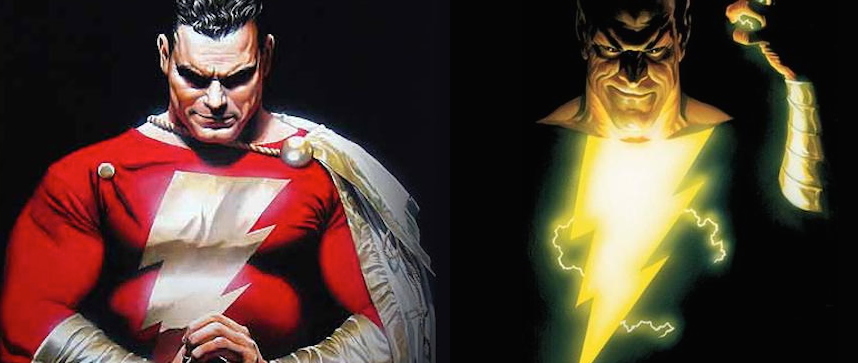
Which means, at long last, we come to the whole crux of this piece - when writer–artist Jerry Ordway stepped in with a bold, cohesive vision for the character. But before the ongoing series came the beautifully painted 96‑page graphic novel "The Power of Shazam!", which re‑imagined Billy Batson’s origin by weaving together the strongest threads from decades of earlier stories.
This time the modern-day reincarnation of Teth-Adam was directly responsible for the murder of Billy's parents during an archaeological dig, *and* for the abduction of his sister Mary, acting under the orders of tycoon Doctor Sivana. Meanwhile, back in the retro-styled Fawcett City, Billy encountered the wizard Shazam and received his powers in a sequence that echoed the original Whiz Comics #2 - with one elegant twist: the mysterious stranger who guided him to the subway was revealed to be the ghost of his father, C. C. Batson - a touching nod to the original artist. By the end, Sivana was ruined, Black Adam had his memories wiped, and the stage was set for a new era.
The graphic novel was very successful, winning several fan awards, and it led to an ongoing series at last. I had enjoyed the story enormously, so was at the front of the queue when issue one appeared in my local comic shop. Ordway stayed on writing duties and provided stunning painted covers every month plus the occasional interiors. Most of the adventures were drawn by Peter Krause and inked by Dick Giordano or Mike Manley.
Right from the start Ordway began to reintroduce other elements of the Fawcett run into current DC continuity. The premiere issue had Uncle Dudley, the villain Ibac and Beautia Sivana, along with new creation Sinclair Batson, a wealthy property developer who wanted to transform Fawcett City. This was swiftly followed by the Arson Fiend, Captain Nazi, and of course Billy's sister Mary and Freddy Freeman - alias Mary Marvel and Captain Marvel Jr. However Ordway added his own twists - Mary now transformed into an adult, and insisted on sharing the "Captain Marvel" name with her brother. She also wore a white costume to further distinguish herself. Meanwhile Freddie resented being called "Junior" all the time, so decided to rename himself "CM3" (which I personally thought was terrible). Ordway also introduced the idea that the Marvels shared a finite pool of magical power, weakening whenever more than one transformed.
Ordway effectively carved out his own little Fawcett-flavoured corner of the DC Universe. Long‑time fans could see the affection for the Golden Age material on every page, even while updating some things to a more modern sensibility. For those (like me) who came to the series completely fresh, or with only a very limited exposure to the character, we were discovering a whole new mythology for the first time.
The 90s in comics has often been defined as a period of grim and gritty violent heroes (and pouches - don't forget the pouches). "The Power of Shazam!" went against the grain and was a successful all-ages adventure book. I'm not down on the former type - I enjoy all types of comics - but these tales of Captain Marvel were something pretty special. Maybe it was the retro feel of things, or that it harkened back to my childhood memories of discovering superheroes for the first time (perhaps even those early Otto Binder Superman stories I mentioned). Whatever the reason, the comic was soon one of my favourites ever month.
Within the first year, Black Adam returned - now reimagined as a more complex, honour‑bound anti‑hero, a take that has endured ever since. Because Ordway was also writing Superman at the time, he folded in elements from those books too - specifically the demonic siblings Lady Blaze and Lord Satanus - who were revealed to be the illegitimate children of the wizard Shazam and the ones responsible for corrupting Black Adam in the first place.
Ordway continued to expand the cast, bringing back a host of Fawcett heroes - Bulletman, Ibis the Invincible and Princess Taia, Spy Smasher, Minute‑Man, Mr. Scarlet - all were part of the new Marvel roster. In the second year, the malicious worm from Venus, Mr. Mind returned, once again teaming up with Dr. Sivana. Even 1940s oddities like Tawky Tawny (a stuffed toy tiger that walks and talks like a man) and Hoppy the Marvel Bunny were reworked in ways that somehow felt charming rather than absurd. And in one unforgettable issue, Ordway even managed to include a cameo from the limb‑splitting ‘Captain Marvel’ of M. F. Enterprises.
In total the series lasted an impressive 47 issues plus an annual and a "DC One Million" tie-in. And that was part of the problem that some believe led to the title's eventual cancellation. Instead of being allowed to mature and grow in the sandbox Ordway had lovingly created in the first couple of years, the title was increasingly dragged into a multitude of DC universe-spanning events that were prevalent at the time. "Final Night", "Genesis", "Underworld Unleashed" - you name it, Captain Marvel, as one of the most powerful heroes in DC's pantheon, was pulled into it. Just as things were building nicely in their own little corner in Fawcett City, along came a company-wide cross-over to derail things - at least that's how some saw it. I'm not sure that for me it was quite that bad, but it's true that DC did have a bit of event madness going on at the time.
That's not to say that Jerry Ordway didn't make the very best of the events he found mandated on him by the wider DC Universe. Nor that Captain Marvel couldn't crossover with other DC characters successfully. One of the best of these was the four-part "Lightning & Stars" which saw Marvel meet the James Robinson version of Starman in a story that spanned both titles. Both Robinson and Ordway clearly had a love of the huge history of the comics medium and liked to try and make all of the ill-fitting pieces of their heroes' continuity work together, so it really was an excellent match.
All in all, it was not a bad run to last for four years in a marketplace dominated by darker, more intense comics and storylines. Many creators today would give anything for a series to last that long in the 21st century. "The Power of Shazam!" showed that you could make a Golden Age flavoured hero work - and it certainly raised Captain Marvel's profile higher than it had been for years. Jerry Ordway and his collaborators should rightly be proud of what they accomplished.
After the series cancellation, it was really superstar artist Alex Ross who became the keeper of the flame of Captain Marvel, who had a large role in the universally praised "Kingdom Come" miniseries he did with Mark Waid. Ross then followed that up in 2000 with the oversized graphic novel "Power of Hope" written by Paul Dini. Marvel also had a big presence in the 12-issue "Justice" mini series, again by Ross, Jim Krueger and Doug Braithwaite published between 2005 and 2007.
There have been alternate versions aplenty such as in Grant Morrison's "Thunderworld" or the "Forever Evil" crossover. "Bone" creator Jeff Smith's mini "Monster Society of Evil" was a more traditional take returning Billy and his alternate to having separate personalities. Following this lead was the young reader orientated "Billy Batson and the Magic of Shazam!" between 2008 and 2010, drawn in an animation-influenced style by Mike Kunkel and others.
But in the 21st century it seems that DC cannot settle on a definitive take on the Marvel Family. Every few years brings another reinvention - either in the pages of "Infinite Crisis" or "The Trials of Shazam". There was even an ill‑judged period during "Final Crisis" where Mary Marvel was turned evil. With the launch of the "New 52" a lengthy backup tale in "Justice League" by Geoff Johns and Gary Frank redefined things yet again, this time with even more family members and making him far more serious and flawed, with his powers rooted in fantasy and magic. Oh, and with Captain Marvel's name seemingly permanently changed to "Shazam". I know that’s how most people recognise him now, but I’ve never been convinced by it.

The name issue has only grown more tangled in the years that followed. By the time of the "Lazarus Planet" and "Dawn of DC" initiatives, he’d been rebranded yet again as “The Captain” - a compromise that pleased absolutely no one. Thankfully, in the current DC "All In" era, the pendulum seems to have swung back. The character is once again referred to as Captain Marvel within the stories themselves, a quiet but welcome restoration of the name he's carried for more than seventy years.
It's been a long, long road for good old Captain Marvel, and he is definitely not going away. As good (and bad) as some of these other comics have been, I still think that beyond the original Golden Age tales, Jerry Ordway's take on the Fawcett heroes is the definitive one. Maybe I'm old-fashioned and stick with the things I loved years ago. Maybe I don't like change (I'm sure that the latest version will bring new readers to the older stories too). Or maybe I just like a hero that is pure of heart, full of wonder and stories where good always triumphs over evil with a smile.
SHAZAM !
Honourable mentions:- Judge Dredd - Hang on...shouldn't this have been the premiere choice? After all it does star the most famous character from my favourite British comic of the last 50 years. Surely this would be my most treasured memory from 1995? A valid point, but I still couldn't bring myself to elevate this film higher than a footnote - there is just too much wrong with it. It tries very hard and there are some excellent elements - the CGI vistas of Mega-City One, the depiction of the Angel Gang, the Hammerstein war robot (even if he really shouldn't be there), but the bad outweighs the good. Stallone obviously thought he was making some kind of comedy (Rob Schneider doesn't help either). Sly's delivery is almost unintelligible, the script is dull as ditchwater and don't even get me started on the decision to remove Dredd's helmet. It's a huge chance squandered and killed the idea of Dredd as a movie possibility for nigh on twenty years. There is an excellent attempt at a fan-edit out on the interweb, but there are only so many ways you can polish a turd...

- You Don't Know Jack - A multiple choice trivia quiz video game that's often genuinely funny, I first came across "YDKJ" via a freebie disc given away with a games review magazine. Billed as the quiz "where high culture and pop culture collide", players get to choose categories from humourous titles that have a (sometimes obscure) connection to the topic. The first player to "buzz in" with the correct answer from the choices given wins the funds on offer. Get it wrong and they lose that amount of money. The winner is obviously whoever has the most cash at the end of the 7 or 21 question rounds, but it's the irreverent and often silly questions, sarcastic commentary from the game's host and especially the spoof adverts and phoney news stories interspersed between games that make it all so much fun. Since the original there have been over 20 different iterations or spin-off's - each with their own unique set of questions and take on the quiz show format. One game of this is never enough...

- SFX Magazine - Wandering through the local shopping centre with my then fiancée, I happened upon a lurid pink logo on a magazine in a newsagent's window, accompanied by a picture of Lori Petty as "Tank Girl". The strapline proclaimed it to be "the hot new science fiction magazine", so it obviously appealed to my personal interests and I was interested enough to pick up a copy. Filled with news, interviews, opinions and reviews of movies, DVD releases, books, comics and assorted other tat, those early issues were a joy to read. Remember, the internet was out of reach of most ordinary folk at this point and there were only a handful of other sources for this kind of niche information ("Starburst" being one, but for some reason I can't explain I never got into it) Decades later "SFX" is still going strong, what was once seen as cult is now mainstream and I have bought every issue - although most were consigned to a skip when I moved house (sob). I've been introduced to dozens of new authors, hundreds of TV shows and films I may otherwise not have touched and yes, I know that everything is at our fingertips now on the web, but there is something special about reading a physical magazine. I don't think I can ever abandon it for the digital world. Long may it continue.

- Waterworld - Yes it went wildly over budget, was a nightmare to film and certain accounts paint Kevin Costner as a micromanaging egomaniac who drove director Kevin Reynolds off the project. But honestly, critics had their knives out long before release. In reality it's a perfectly enjoyable Mad-Max-esque post-apocalyptic action romp with an intriguing premise, impressive action and solid performances. What people forget is just how audacious this film was. A major studio blockbuster shot almost entirely on open water, with colossal practical sets, real stunts, and a world‑building ambition that most modern films wouldn’t dare attempt. There’s a sense that everyone involved was genuinely trying to create a future that felt real and dangerous. Sure, it has flaws, but it’s nowhere near the disaster people love to pretend it is - and thanks to DVD and later restorations, it’s been reassessed far more kindly. The extended cut was a big improvement, but if you want the definitive version, seek out the "Ulysses Cut". It finally shows the film as the ambitious, oddball blockbuster it always wanted to be.

- Northern Lights (The Golden Compass) - The first book in Philip Pullman's celebrated "His Dark Materials" trilogy mixes parallel worlds, animal embodiments of people's souls, witches, armoured polar bears and a thinly veiled version of the Catholic Church. As 'young adult' novels go, it definitely veers more towards the older end of the spectrum and it's rare to see a fantasy story tackle such weighty philosophical themes as destiny, free will, the suppression of knowledge by organised religion, and the differences between innocence and experience. As a whole, the trilogy is a masterpiece,

- Astro City - Kurt Busiek's creator-owned title set primarily around the titular fictional metropolis is probably one of the greatest superhero universes of the last four decades. Busiek took the ground level themes he developed on the "Marvels" miniseries and applied them to his own creations - a huge cast of characters, some of which just appear in the background for years then are suddenly catapulted into the spotlight. Stories are less likely to be about the latest universe-shattering event and more about the small things - a date between two ultra-powerful beings, two brothers in the lower echelons of heroes, the decades long "friendship" between a hero and a villain, a bystander's attempts to come to terms with having being held hostage, etc., etc. Everything comes across as being meticulously planned (even though I'm sure it's not) and is superbly illustrated by Brent Anderson with megastar Alex Ross on covers and character designs. Above all the absolute love for the medium and the heroes that form its backbone shines through.

- Sabriel - So after discovering Philip Pullman, I started to take a closer look at other 'young adult' novelists, and this title by Australian Garth Nix leapt out at me. Like many of his contemporaries, Nix takes a time-worn concept - in this case non-magical and magical countries separated by a barrier and a protagonist flirting with destiny - and spins something truly new out of it. When her father is lost, Sabriel becomes the next Abhorsen, able to cross into the realm of Death and quieten the restless dead through the power of necromancy and the use of her bells. However she also faces the menace of Kerrigor, who wants to destroy the 'Charter' that keeps wild free magic from corrupting both her Old Kingdom and the world of Ancelstierre on the other side of the wall. It's a great story full of surprises, but for me it's Nix's development of the history of his world and its system of magic that really shines here.

- Richard III - There have been a lot of great versions of the Shakespeare play concerning the rise and fall of the machiavellian Richard Plantagenet, but I'd put this one starring Sir Ian McKellen at the very top. Set in a fascist version of 1930s Britain, the film further ramps up the disturbing overtones by the use of various elements of the Nazi Third Reich. This, coupled with the use of real buildings instead of sets (a then derelict Battersea Power Station for one) adds another note of disturbing realism to the whole project. McKellen is, as one would expect, truly magnificent in the lead role, his Richard relishing being the villain of the piece, as he schemes his way to power. The screenplay (adapted from the previous 1990 stage production in which Ian also starred) makes some bold visual choices with the interpretation of the text. Richard often speaks directly to the camera, and my favourite is when the famous "winter of discontent" speech begins with a Nazi-like rally but ends with him plotting to himself while peeing in a dilapidated gent's toilet! Ably supported by, amongst others, Robert Downey Jr, Nigel Hawthorne and Kristin Scott Thomas, this really is a mesmerising piece that I keep returning to.

- Assassin's Apprentice - When Megan Lindholm released her first novel as "Robin Hobb", few could have imagined that the story she began here would grow to cover sixteen different novels across more than twenty years in both real and fictional time and become one of the best-loved fantasy sequences of recent decades. This initial volume details the early life of FitzChivalry Farseer, a royal bastard who becomes an assassin and whose actions may one day decide the fate of the world. While one could argue that the fantasy setting appears fairly standard (although it expands hugely as subsequent trilogies add to the mythos), it's the characters that Hobb creates that stick in the memory. There is real skill in making the reader care about the inhabitants of the Six Duchies and building and developing their relationships - especially when the book is all told in the first person. The abiding friendship between Fitz and the mysterious 'Fool' is at the heart of the whole series and it's that core that keeps her legions of fans coming back for more.

- Preacher - No look back at 1995 would be complete without mentioning the infamous Garth Ennis Vertigo comic which introduced the world to Jesse Custer, Tulip O'Hare, Cassidy the vampire and of course Arseface. When the reluctant minister is accidentally bonded with Genesis, a creature born from the forbidden union between a demon and an angel, it kick-starts a quest to find God and make him accountable for his neglect of humanity. What follows is shockingly violent and filled with an array of hideous grotesques - yet also manages to take in the legends of the American West, individual morality and the limits of friendship and love. The late, great Steve Dillon illustrates every page of the main series and there is almost no one better at being able to portray intimate emotions playing across a character's face followed by scenes of sometimes disgusting depravity. All this, plus some of the most beautiful covers ever from Glenn Fabry.

- The Baker's Boy - one final new fantasy novel for this year and it's the first of the "Book of Words" trilogy by Julie "J.V." Jones. It seems to be the usual tale of a pair of familiar-ish characters - a downtrodden servant boy who finds a power awakening inside him and a princess who wants to escape the dull life planned for her. But traditional doesn't have to mean bad, and Jones puts enough twists and turns and political machinations into her plots to keep things interesting, telling the story from multiple points of view using both major and minor characters. She has particular skill with her villains - the sorcerous chancellor Baralis being the highlight for me, but the gluttonous Archbishop Tavalisk is also a lot of fun. I remember speeding through the complete trilogy very quickly. Sadly it appears that personal difficulties have meant a longer and longer gap between subsequent novels, and Jones's follow-up series "Sword of Shadows" remains unfinished with nothing new since 2010. I wish her well and hopefully her situation improves. I'd love to read more work of the quality of her debut.