1990:
The trivia:
- Long before the hugely successful musical comedy series concerning the William McKinley High School Glee Club, there was another TV show that tried to fuse drama with big show tunes. "Cop Rock" was created by "Hill Street Blues" supremo Stephen Bochco and centred on the Los Angeles Police Department as they went about their usual duties, but routinely broke out into musical and dance numbers throughout the storylines. It's bizarre nature and a critical drubbing meant it lasted a mere eleven episodes.
- An even quicker departure from TV screens was the fate of an incredibly ill-considered "situation comedy" from fledgling UK satellite TV channel 'Galaxy'. "Heil Honey I'm Home!" was a parody of early American domestic comedies with their corny characters and wildly applauding audiences. The problem was that the situation was Adolf Hitler and his wife Eva Braun living in Berlin and repeatedly trying to get rid of their Jewish neighbours next door! Needless to say although a number of episodes were recorded, only one was ever shown amidst a storm of protests and the whole thing was quietly shoved under the carpet never to be seen again.
- Launched in October 1990, the now world‑famous Internet Movie Database (IMDb) started life as a simple Usenet posting by British film fan Colin Needham. Back then, however, it wasn’t the sprawling encyclopaedia of global cinema we know today, but a tiny, oddly specific list called “Those Eyes”, dedicated entirely to actresses with beautiful… well, eyes. A handful of enthusiasts trading notes across bulletin boards, gradually expanding their interests from favourite performers to filmographies, trivia, and eventually full cast and crew listings. Within a couple of years, Needham’s hobby had evolved into a structured database. By the mid‑90s it had become an indispensable resource for film fans - and by the time Amazon acquired it in 1998, it was already the default reference point for anyone wanting to know who directed what, who appeared where, or why that actor looked familiar.
Twin Peaks
There are certain moments in your life when you can feel the ground shift beneath your feet - when something arrives that doesn’t just entertain you, but rewires your expectations of what a medium can do. For me, 1990 was one of those moments - the year a strange little show from David Lynch and Mark Frost slipped onto BBC2 and quietly detonated inside my brain.
To be honest I don't really want to talk about the minutiae of the plot or the quality of the scripts and actors and programme makers. Far better people than I have written thousands of words on the subject. But for the sake of those who may have been living under a rock, let 's get the basic information out of the way first - the stuff that pretty much everyone is aware of even if they have never watched the show. Special Agent Dale Cooper. Who killed Laura Palmer? A body wrapped in plastic. Damn fine coffee. Diane. One-armed men, giants, owls and a killer called BOB. A red curtained room where things bend backwards - and lots of weird stuff that no one quite understood.

It’s hard to explain to anyone who didn’t live through it just how all-consuming that central mystery became. “Who killed Laura Palmer?” wasn’t just a tagline - it was a national obsession. People discussed it in offices, in pubs, in newspapers, on radio phone‑ins. Even my non‑geek friends were hooked. Every week, the show would offer clues that felt like answers, and answers that felt like riddles. It was maddening, surreal and intoxicating in equal measure.


Of course in 1992 we did get something new, although "Fire Walk With Me" wasn't quite what I personally had in mind. After the cliff‑hanger of season two, I think most fans were hoping for answers - or at least some sense of resolution. What Lynch delivered instead was a descent into Laura Palmer’s final days. Raw, harrowing, and stripped of the quirky humour that had made the series so accessible. It's disturbing narrative and time-twisting prequel / sequel nature meant that on first viewing many didn't get it - including, I hate to admit, me. It wasn't a "Twin Peaks" continuation - more a David Lynch horror movie set in the same world. Of course with the benefit of hindsight, I've come to realise what a brilliant and essential piece of cinema it is, and how the film seeds many of the themes that Lynch would explore decades later.

In the years that followed, I continued to stay connected to "Twin Peaks" fandom, buying the regular magazine "Wrapped In Plastic" from Win-Mill Productions. But by the time that folded in 1996, any sign of a third series was non-existent and the television world had moved onto other things. But the show lingered. It resurfaced in odd places - a reference here, a parody there, a knowing wink in some other show that owed it a debt. You could feel its fingerprints in things like "The X‑Files" or "Lost" - in every prestige mystery show that tried to blend the mundane with the uncanny. But nothing ever was "Twin Peaks". Nothing even came close. So for a long time afterwards, it lived at the back of my mind as this strange, beautiful, unfinished thing. A relic of a time when television briefly dared to be art. The series never really left my thoughts, so I eagerly purchased the various DVD and Blu-ray box sets as they came out, relishing the additional material each one provided.


As it's popularity grew during those dark evenings of late 1990, it became obvious that Twin Peaks was a place that existed just slightly out of phase with reality. A place where log ladies dispensed cryptic wisdom, where the mundane could turn uncanny with a single word, and where nightmares bled into waking life. I remember watching the Red Room backwards-talking sequence for the first time and feeling genuinely unnerved. Television simply didn’t do that. Not back then.

My friends and I moved beyond just individually watching the show, to having weekly "Twin Peaks evenings", where we could get together, view the episode and then dissect what it all meant. The soundtrack album became our backdrop. We poured over every new snippet of information in newspapers and magazines. Amazingly, considering the UK was six months behind original transmission at the start, I don't remember any spoilers leaking out. Quite frankly, we were obsessed.
Then came the shooting of Agent Cooper at the end of episode eight. Luckily the show had become such a talking point that the BBC rolled straight into season two, and we only had to wait over the Christmas break before finding out the resolution. That gave me time to devour "The Secret Diary of Laura Palmer" - an official tie-in novel that fleshed out the personal history of the tragic teenager and her descent into a world of prostitution, drugs and the manipulations of an evil creature called BOB. It was the perfect way to continue my fascination with the series and it's characters.

When the programme returned in January it was full steam ahead into twenty-two episodes of drama, weirdness and horror. The revelation of Laura's killer was just the start. Nadine as school girl with super-strength, An early David Duchovny as Denise Bryson, the transgender, DEA agent. Josie getting trapped in a door knob, Laura's twin cousin Maddy. Even Lynch himself as FBI Chief Gordon Cole. Of course, I know now that the show suffered through network interference and Lynch stepping away, and it's true that things wobbled. But even at its weakest, “Twin Peaks” was more interesting than most shows at their best. And I may be in the minority here, but I really enjoyed the involvement of Cooper's old partner Windom Earle and the lengths he went to to gain access to the Black Lodge. The more mystery and mythology the show added the better as far as I was concerned - which meant that the final episode was an astonishing mix of the mundane and the mad, culminating in one of the best cliff-hangers in TV history.

Sadly there was to be no immediate follow-up. I felt devastated, so I consoled myself with the other assorted official merchandise. "The Autobiography of FBI Special Agent Dale Cooper" gave a lot of background to the unconventional agent. "Twin Peaks: An Access Guide to the Town" became my travel guide to a place that didn’t exist. But my favourite was "Diane... - The Twin Peaks Tapes of Agent Cooper". Performed by Kyle MacLachlan, it was a cassette-only release which consisted of newly recorded Cooper messages to his unseen assistant, mixed in with sound clips from the broadcasts. This was material set both before and during his trip to Twin Peaks, including Cooper being shot and recovering afterwards. It was as close as I could come to a new episode.

Of course in 1992 we did get something new, although "Fire Walk With Me" wasn't quite what I personally had in mind. After the cliff‑hanger of season two, I think most fans were hoping for answers - or at least some sense of resolution. What Lynch delivered instead was a descent into Laura Palmer’s final days. Raw, harrowing, and stripped of the quirky humour that had made the series so accessible. It's disturbing narrative and time-twisting prequel / sequel nature meant that on first viewing many didn't get it - including, I hate to admit, me. It wasn't a "Twin Peaks" continuation - more a David Lynch horror movie set in the same world. Of course with the benefit of hindsight, I've come to realise what a brilliant and essential piece of cinema it is, and how the film seeds many of the themes that Lynch would explore decades later.

In the years that followed, I continued to stay connected to "Twin Peaks" fandom, buying the regular magazine "Wrapped In Plastic" from Win-Mill Productions. But by the time that folded in 1996, any sign of a third series was non-existent and the television world had moved onto other things. But the show lingered. It resurfaced in odd places - a reference here, a parody there, a knowing wink in some other show that owed it a debt. You could feel its fingerprints in things like "The X‑Files" or "Lost" - in every prestige mystery show that tried to blend the mundane with the uncanny. But nothing ever was "Twin Peaks". Nothing even came close. So for a long time afterwards, it lived at the back of my mind as this strange, beautiful, unfinished thing. A relic of a time when television briefly dared to be art. The series never really left my thoughts, so I eagerly purchased the various DVD and Blu-ray box sets as they came out, relishing the additional material each one provided.

Every few years, rumours would flare up. A reboot. A movie. A miniseries. A web project. A way to explain everything and resolve the dangling plotlines. Most of them fizzled out. Some were never real to begin with. There were interviews where Lynch would say he’d love to revisit the world “if the stars aligned,” and then go off to make something completely different. But the hope never quite died, there was still this persistent ache - a sense that the story wasn’t finished. That Cooper was still trapped in that mirror. That Laura Palmer still had something left to say.
What’s funny, looking back, is how much the TV world changed during that long silence. The medium that once treated "Twin Peaks" as an oddity eventually embraced the very things it pioneered - long‑form storytelling, cinematic ambition, surrealism, moral ambiguity. By the time we reached the 2010s, the landscape was full of shows that owed their existence to Lynch and Frost’s experiment. And yet, none of them quite captured that same feeling.

When the announcement finally came in 2014 that “Twin Peaks" would return, it felt unreal. Part of me was ecstatic. Part of me was terrified. Nostalgia revivals rarely go well. After all those years, how could it possibly live up to the weight of expectation? How could you go back to a place that had existed for so long only in memory? But what we got in 2017 didn’t feel like a standard revival. Lynch and Frost weren’t interested in nostalgia. They weren’t even interested in picking up where they left off. This was something stranger and infinitely more ambitious.
Most revivals try to recapture a mood. Bring back that old magic. "The Return" refused to. Instead, it confronted the very idea of returning - to a place, to a story, to a version of yourself that no longer exists. It embraced the whole twenty‑six‑year gap. It made the waiting part of the narrative. Forget answers. Forget a weekly procedural. This was a 17‑hour cinematic tour-de-force of pure undiluted Lynch, framed through his decades as a film-maker. He was older. We were older. And you really can't go back again.
The fan reaction was… complicated. Some people wanted cherry pie and quirky humour and a neat resolution to Cooper’s cliff‑hanger. What we got instead was Dougie Jones shuffling through Las Vegas for hours on end, a glass box in New York that devoured people, a nine‑minute atomic bomb sequence that felt like the birth of evil itself, and a finale that left the world collectively staring at their screens in stunned silence.

But for me, it was mesmerising. It was like Lynch was speaking directly into my brain: "You thought you understood this story. You didn’t. You never did." Nowhere was that clearer than episode 8, which probably deserves its own essay. It's one of the most astonishing hours of television ever broadcast. A black‑and‑white nightmare - Lynch at his most uncompromising. I remember sitting there afterwards trying to process what I’d just seen. It was terrifying, beautiful, and utterly unlike anything else on TV. Again.
And then came the finale. Even now, I can still feel the chill of that final scene. The sense that reality had slipped sideways - the same jolt I’d felt back in 1990. I remember watching the online discourse unfold - confusion, frustration, awe, anger - as if they’d all watched different endings. It was like the show had split the audience into their own parallel realities each one convinced they’d seen the “real” version. And in a strange way, we probably had.

In the months after "The Return", there was that familiar flicker of hope again - whispers of a fourth series, interviews where Lynch hinted that the story might continue. In the meantime, Mark Frost’s books arrived like unexpected postcards. "The Secret History of Twin Peaks" and "The Final Dossier" didn’t feel like continuations so much as attempts to make sense of the world we’d just revisited. Part archive, part epilogue, I read them with a sense of curiosity, but they didn't really scratch that "itch". And then, when Lynch sadly died in 2025, that lingering hope of more finally softened into a gentle acceptance that the door to "Twin Peaks" had closed for good. What we had was what we had, and somehow that made it all feel even more precious.
Looking back now, I feel the reason "Twin Peaks" has stayed with me for so long is exactly because it never let itself be pinned down. It wasn’t just a mystery, or a soap opera, or a horror story, or a surreal experiment - it was all of those things and none of them, constantly shifting just when you thought you’d figured it out. It was challenging and frustrating and at times bloody weird. But most importantly I think - and apt for these "Golden Sunsets" posts - although many people see it as a battle between good and evil played out on a cosmic scale, I've always felt that at its heart it was a show about the instability of the one thing we can't control - memory.

Honourable mentions:


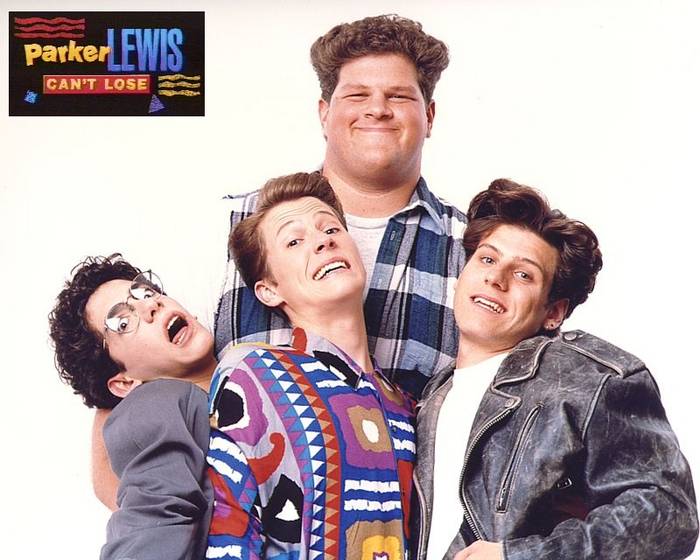
- Parker Lewis Can't Lose - In the wake of the success of the 1986 movie "Ferris Bueller's Day Off", the Fox TV network debuted a high school comedy series that riffed on the same idea of a student constantly getting one over on the teachers and other antagonists. The difference was that "Parker Lewis Can't Lose" embraced a far more surreal element that saw it teeter on the edge of destroying the fourth wall. As the titular cool guy, Corin Nemec strolled through the halls of Santo Domingo High with his best buds with unshakeable self confidence, a plan for every situation and an endless supply of loud shirts. Every episode brought a new problem - whether it was outwitting the machinations of the Cruella de Vil-like Principal Musso or Parker's own maniacal little sister. There was an almost Chuck Jones cartoon-like quality to the production, with endless sight gags, visual cues and pop culture references (that will seem incredibly outdated by now). Importantly it was one of the first shows that I ever watched on satellite television. Late 1990 was the year that we got a Sky box after my parents had initially gone with the "squariel" dish and the five BSB channels - not the first time that my dad backed the loser in a technology race. In a plethora of new imported shows on "Sky Channel", this little comedy stood out as being fresh and different, even if it was a little cheesy.
- Dances With Wolves - Kevin Costner’s epic historical western was my favourite film of the year by a wide margin. I’d already grown up on the classic westerns (thanks mum and dad), but this felt like something bigger and more sweeping in its ambitions. I vividly remember going to the cinema with my friends and being completely absorbed from the opening moments (even if the projectionist initially had the aspect ratio wrong, squashing everyone into strange shapes until they restarted the reel). At a time when three‑hour films were still a rarity, it felt like a genuine event. The landscapes were breathtaking, the Lakota characters were treated with a respect and depth I hadn’t seen before, and John Barry’s Oscar‑winning score was the icing on the cake. I was so taken with it that, like "Jaws", I’ve ended up buying multiple versions over the years - VHS, DVD, Blu‑ray, with of course the four‑hour special edition making the whole experience feel even more immersive. It’s one of those films that arrived at exactly the right moment for me, and it’s never really left.

- Shade The Changing Man - Peter Milligan and Chris Bachalo’s comic arrived as part of DC’s early‑90s “proto‑Vertigo” wave, and it felt like nothing else on the shelves at the time. What began as a revival of Steve Ditko’s oddball 1970s character quickly mutated into a surreal, psychedelic road‑trip through the American psyche - a comic that mixed political satire, psychological horror, pop‑culture and dream logic with a confidence that bordered on reckless. Bachalo’s art was a revelation - angular, fluid, and constantly shifting, as if the panels themselves were being warped by Shade’s Madness Vest. Special mention also has to go the Brendan McCarthy's incredible covers. It was unpredictable, ambitious, occasionally baffling, and absolutely riveting stuff. Even when the series arguably went on longer than it needed to, I stuck with it because it still felt special in a way few comics did at the time. Looking back, it’s no surprise that "Shade" became one of the pillars of early Vertigo; it had that rare combination of style, strangeness and originality that defined the imprint at its best.

- Postcards From The Edge - Carrie Fisher’s semi‑autobiographical novel was already sharp, funny and painfully honest, but the film - with Meryl Streep as Suzanne Vale and Shirley MacLaine as her formidable mother Doris - adds a layer of Hollywood magic. Dennis Quaid, Gene Hackman and Richard Dreyfuss round out a prestige cast, but the reason it earns a place on this list is the ending - specifically Suzanne’s performance of “I’m Checkin’ Out.” Even if you’re not a country‑music fan, the song lands with a huge jolt of energy after a film full of rehab, career anxiety and fraught mother‑daughter drama - a declaration of survival disguised as a honky‑tonk showstopper. The camera pans in, the band kicks off, and suddenly the film that began with a drug‑induced collapse ends with a woman standing upright, singing her way out of the wreckage. It’s a terrific film, but that final performance is just wonderful.
- The Crystal Maze - The original and best version of the classic puzzle-solving adventure game show, with mercurial host Richard O'Brien. The challenges saw teams of contestants travelling across four different "zones" to compete in a series of different mental, physical, skill or 'mystery' games against the clock. Each successful game won a time crystal, which allowed the players a certain amount of time in the "Crystal Dome". Here they had to collect as many gold tokens as possible from the hundreds blown into the air by gigantic fans. Getting over a certain number of gold tokens won a stellar prize (usually activity days out). O'Brien was a perfect if unconventional host - genial and welcoming but also quick with a deadpan quip and jokes to camera about the contestants stupidity. His presence made the programme hugely successful and I religiously watched every week. After his departure it limped on with Ed Tudor-Pole but it was never the same. However the format was so well regarded that there was a 2017 revival with Richard Ayoade as host. I'm not his greatest fan, but he actually did manage to make it his own thing. There are even real world versions you can take part in. I really must get a team together...

No comments:
Post a Comment