Wednesday, August 02, 2017

Golden Sunsets - 50 Years Of Memories - Part 28 - 1994

This time around, it was once again hard to find something for the top spot. But for a a change it was not due to a wealth of choices, but because my mind was elsewhere. I had met the woman who would become my first wife, we had moved in together and were planning a wedding. Compared to that, everything else seemed...less important...

1994:

The trivia:
  • During a quiet Wednesday evening meeting off the local neighbourhood crime watch meeting in Homestead, Florida, proceedings were interrupted by the noise of a very low-flying plane. Suddenly a package fell out of the aircraft and landed slap bang in the middle of the gathered residents. It turned out to be a 75-pound bag of cocaine.
  • When rain began to fall in Oakville Washington in the early hours on 7th August 1994, residents noticed that it was not water but a strange jelly-like substance. Within a few hours various people became violently ill with vertigo, blurred vision , nausea and trouble breathing. when a sample of the material was examined it was found to contain human white blood cells and was teeming with two species of bacteria, one of which lies in the human  digestive system, Over a period of three weeks this strange phenomenon would occur a total of six times and while theories abounded about the cause - ranging from human waste from an airplane, jellyfish thrown into the air by a naval bombing exercise and even the testing of a military biological weapon - nothing was ever confirmed. Apparently no samples of the jelly still exist. I wonder why?...
  • After an earthquake caused a power cut over most of Los Angeles, many people phoned observatories (and allegedly even emergency services) to report a strange giant silvery cloud in the sky over the city. It was the Milky Way.

The memory:

The Shadow:

I have already established with previous entries that I have a real fondness for the 'pulp' characters from the early part of the 20th century - heroes such as 'Doc' Savage, Buck Rogers, Flash Gordon, Biggles and Tarzan. I'd enjoyed many of their exploits in the pages of numerous paperback novels, on television and on film - and the main memory of this post is a cinematic one. However with "The Shadow", I came to know first him through another route...

Originally "The Shadow" was simply the sinister announcer of the "Dectective Story Hour" radio show, but intense listener interest led to publishers Street & Smith hiring Walter Gibson to develop a concept and persona to fit the mysterious voice. Beginning in April 1931 and containing for almost two decades, Gibson wrote 282 (out of 325) adventures of the dark vigilante under the pseudonym Maxwell Grant - incredibly that's a novel-length story twice a month. Other guest writers (including 'Doc' Savage's own Lester Dent) did the remainder.

Gibson created the foundations of "The Shadow" - including his persona, multiple  aliases, helpers, and super-villains - and detailed how he terrified criminals as he prowled the streets under the cover of night. His distinctive wide-brimmed hat and red lined cloak coupled with the crimson scarf that just left his eyes and nose exposed and his dual pistols was a familiar image to readers.


As his popularity grew, "The Shadow" expanded into his own radio dramas in 1937, starring a 22-year old Orson Welles as wealthy socialite Lamont Cranston, the vigilante's civilian identity (confusingly, his real name is Kent Allard). It's here that he first exhibited the ability to 'cloud men's minds' so that he could effectively become invisible and where Margo Lane - Cranston's love interest, crime-fighting partner and the only person to know his secret identity - was introduced (the novels did not include her til four years later). After Welles, a succession of other fine voice actors followed and between 1937 and 1954, "The Shadow" was a Sunday night staple of the Mutual Radio Network across the USA.


The same year saw the first film - "The Shadow" Strikes", starring Rod La Rocque in the title role. This was quickly followed by a sequel - "International Crime" - and then a 15-episode serial with Victor Jory. Monogram Pictures then produced a trio of B-movie style features in 1946. The last film for nearly forty years was 1958s "Invisible Avenger" which was actually two episodes of an un-transmitted television show which were spliced together.


"The Shadow" has naturally been adapted for comics several times during his long history. The first time was as a daily newspaper strip between 1940 and 1942 where the plots were adapted from the Walter Gibson pulps. Publishers Street & Smith got in on the act themselves with "Shadow Comics" which lasted 101 issues until 1949. Archie Comics did eight issues in the 1960s which inexplicably turned the character into a blonde superhero in a green and blue costume! In the mid-1970s, DC Comics published a more authentic and atmospheric interpretation as a 12-issue series from writer Dennis O'Neill and artist Michael Kaluta (followed by Frank Robbins and E.R. Cruz). This was extremely well-regarded and also included a team-up with another pulp creation, "The Avenger".


The Shadow also got to meet Batman in the pages of that hero's title, where Bruce Wayne called the crime fighter "his greatest inspiration" - something that was true in the real world too, as co-creator Bill Finger had used elements of the classic mystery man in the development of the Dark Knight. Batman's first story was even loosely based on the Shadow story "Partners of Peril". The second team-up a few issues later even revealed that Kent Allard saved Wayne's life when he was a child.

So by the time we hit the mid-80s, we had a crime fighter who had been around for more than fifty years across multi-media platforms. Yet somehow I had never read a single one of his adventures in prose or comics, nor seen or heard any of the various adaptations. I think it had all been too far in the past or I was too young - I was only six when the O'Neill / Kaluta series was published and the black and white serial was not shown on the BBC in the school holidays like the Buster Crabbe "Flash Gordon" epics. Beyond being aware of the name, "The Shadow" and a vague idea of his literary origins, he was a blank canvas to me.

That soon changed however, via the controversial 1986 mini-series "Blood & Judgement" from "American Flagg" creator Howard Chaykin. Instead of a period piece, this was a sexy, violent re-imagining, which transplanted the nocturnal crime fighter to then-modern-day New York. Crucially however this was not a reboot. It postulated that Lamont Cranston had vanished in the 1950s, only to reappear thirty years later looking not a day older when his former associates were targeted by an assassin. Dealing bloody justice to a sea of criminals, The Shadow was engaged in a desperate race against time to track down his oldest enemy and counter a deadly plan to bring about nuclear armageddon.

I'd been a big fan of Chaykin's work on "American Flagg" and this was very much in the same vein, helped by long-time lettering collaborator Ken Bruzenak. This was a fast-paced, action-filled thriller full of square-jawed men, drop-dead gorgeous women, seedy dens of iniquity and violent death - no wonder it was labelled for mature readers. Yet despite being set in the contemporary USA, it seemed to ooze a certain 1930s style, and I immediately took to the character.

The mini-series was successful enough to warrant an ongoing comic book, but Chaykin was busy elsewhere. Enter writer Andy Helfer (who had been the editor on "Blood and Judgement") and eclectic artist Bill Sienkiewicz, hot off his runs on "New Mutants" and "Elektra: Assassin". Helfer added newcomers to The Shadow's list of agents, as they investigated ever more bizarre cases. The sex quotient was phased out in favour of black humour, which ramped up even more when Kyle Baker came on board as artist with issue eight.

Baker was new to the comics scene at this point. Seminal works like "Why I Hate Saturn" were still in his future, so this was the first time people got to experience his style and see him grow as an artist. I loved his cartoonish renderings and while the series was vastly different to that produced by Chaykin, it still became one of my top monthly reads. Under Helfer and Baker "The Shadow" became a virtual psychopath, little better than some of the villains he fought and their take on the hero and his attitude towards his calling became more and more irreverent - culminating in them killing him off only to resuscitate his head atop a giant robot body.


But rumours had begun to circulate that current copyright owners Condé Nast were not happy with the direction their property was being taken in. Whatever the truth, the popular series was abruptly cancelled with issue 19 and the next "Nuts & Bolts" storyline was never published. It was a sad end to a brilliant comic. Helfer's skewed vision and Baker's cartoon-like stylings were a perfect match. When the character returned in 1989 it was back in his original hunting ground of the 1930s in a more traditional take on the pulp stories. Gerard Jones and Eduardo Barreto did a competent enough job, but I had moved on to other things by that point and only picked up a couple of issues when it crossed over with "Doc Savage" which DC also published at that time. That would be the end of my involvement with "The Shadow" for five years...

So at last we come to the core of this memory for 1994. Once again the 1930s suspense hero was adapted into a feature film - this time directed by Russell Mulcahy (of "Highlander" fame) and  starring Alec Baldwin as Lamont Cranston and Penelope Ann Miller as Margo Lane, with supporting roles for Ian McKellen and Tim Curry. It combined elements of all the various versions from novels, comic books and radio plays - plus a few new twists of it's own (such as Cranston's ability to mystically conjure a totally different face when he is out on the prowl as "The Shadow").


Unlike the much earlier tongue-in-cheek adaptation of "Doc Savage", this pulp film is more straight-laced, building a downbeat origin story for the masked crimefighter - with just a touch of "Doctor Strange" to it - and crafting a reason for him to stalk the mean streets with his cape, wide-brimmed hat, silver pistols and maniacal laugh. Cranston is also a ruthless individual who coerces those he saves into joining his team of operatives - everything is in service of his war on crime. Yet he's a tormented soul, who seems confused about who he really is. At one point during a conversation with Margo Lane he proclaims "I dreamed I tore all the skin off my face and was somebody else underneath"...

The villain for the film is the pulp novels re-occurring mastermind, Shiwan Khan (John Lone) - who I had come across previously in the DC comics. A direct descendant of the Mongol warlord Genghis Khan, he has telepathic, hypnotic and mind-controlling powers and is very much the Moriarty to Lamont Cranston's Sherlock Holmes, having had similar training by Tibetan monks. Khan intends to dominate New York by both scientific and mystical means and only The Shadow and his associates can stop him.


Visually the film is incredible, with a sumptuous Art Deco New York as it's centrepiece, replete with towering city blocks, vintage cars, period costumes and swirling mist. It really does evoke the feel of the time the original stories were written. Clearly there is *some* influence from the superhero movies that came just a few years before - Burton's "Batman" immediately come to mind - yet "The Shadow" manages to plow its own furrow in most areas and in some harks back to the more absurdist take on the Dark Knight from the classic Adam West series of 1966 - the nuclear bomb in the finale is a giant pinball that careers across a tilting floor and down a maze of hallways.... 

The modest SFX are also very good. Sure they might look a little dated to today's audiences, but to be honest, even though today's CGI wizardry might enable directors to put actors into any scenario or backdrop, there is something rather 'special' about pre-digital matte paintings and optical effects. Maybe it's just my generation.

Are there some liberty's taken with the source material in the transition to celluloid? Probably. But you have to remember that at the time I first watched the film I was totally unfamiliar with any of the pre 80s versions - and those certainly weren't afraid to tinker with the perceived lore built up over the past decades! Maybe that helped me embrace the fun and excitement when so many others had problems with it. Sure the story is hardly original and some of the dialogue might be a bit dramatically overstated, but what do you want from a pre-war mystery magazine adaptation? It was never going to be a Shakespearean classic. It helps that it's also well cast, with Baldwin in particular doing well in the dual roles - effortless charm as the playboy socialite by day and all gravel voice and dark obsession by night, as he strikes fear into the heart of the criminal fraternity.

What really works for me is that it genuinely feels like a live-action recreation of the comics I had loved, albeit transposed back to the original 1930s milieu. It's not grim and gritty or grounded in the real world - and is all the better for it. Everything just works and you can sit back and enjoy a rip-roaring high-action old-school adventure. It's unapologetic good fun.

Who knows what evil lurks in the hearts of men? The Shadow knows !


Honourable mentions:
  • Starman - James Robinson's new take on the son of one of DC's original Golden Age heroes manages to not only tell a mature and original story but also weave the history of every single character ever to bear the name into the narrative in a way that made total sense. It's a masterclass in using DC's rich legacy to create a new hero for the modern day. Themes of nostagia, age, collecting and the aftereffects of violence permeated the whole 6 year run and it's a testament to the power of Robinson's work that no-one has attempted to resurrect Jack Knight in the years since the series reached it's natural end. Definitely one of my top 20 comics.
  • Inside The Actor's Studio - I'll admit that I didn't get to see this show until Sky's satellite channels started broadcasting episodes in the UK - and by then it had been running for several years - but I soon became addicted to the programme and it's simple format. Every week, James Lipton - Dean Emeritus of the  Actors Studio Drama School at Pace University in New York -  interviews the worlds biggest film and television actors, taking them and us through their careers from humble beginnings to the present day. These are not promotional chats, but in-depth conversations about their life and work and Lipton's meticulous research is legendary. Sure, sometimes things can get a little cosy and verge on the fawning but more often than not you find that actors really open up to Lipton and reveal real insights into their personalities, life and the way they approach acting. It's always fascinating stuff, not to mention the amazing fact that Lipton is still going strong at 90 years of age.
  • True Lies - Arnold Schwarzenegger has made a lot of good movies but this is one of my favourites because it manages to so successfully blend action and humour. Arnold plays a computer salesman whose real life as a government super spy is a secret from his wife and family - a sort-of "what if James Bond was married?" scenario.  Cue lots of explosions, fights and cheesy one liners but layered with romance and a knowing wink at its own ridiculousness. It helps that Arnold is ably supported by Jamie Lee Curtis and Tom Arnold and of course James Cameron behind the lens.
  • Caliban's Hour - Another entry for Tad Williams, but this is a much slimmer volume compared with his door-step sized fantasy epics. It's a sequel to Shakespeare's "The Tempest" (always one of my top plays from the bard), which sees the monstrous looking Caliban forcing a captive Miranda to listen to the dark tale of his origins and the magical and terrible things which led him to a life of villainy - although maybe things are not quite as black and white as they first seemed. Caliban presents his version of events, which offer a new perspective on the original play and many details are expanded upon, turning him almost into a sort of anti-hero. It's a brilliant examination of one of Shakespeare's most famous characters and although knowing something of the original text is helpful it's not essential.

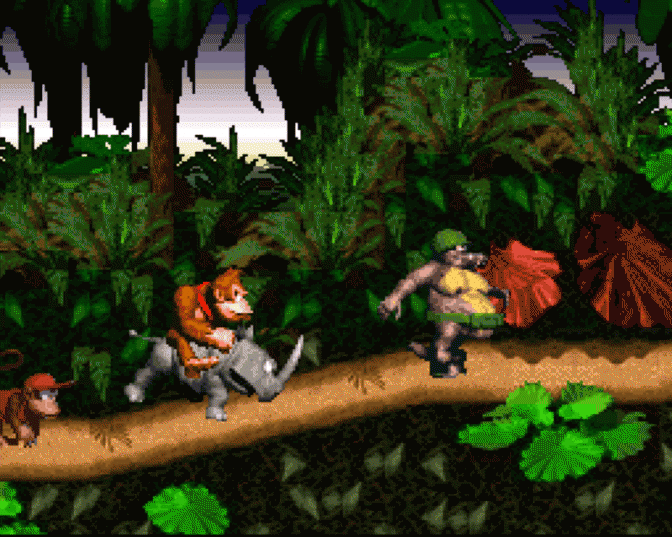
  • Donkey Kong Country - I never owned a Super Nintendo Entertainment System (SNES). But my young brother-in-law to be did. When I went to visit the in-laws in the period leading up to my wedding, he and I bonded over video games  - and the one we played the most was this classic from the constantly innovative Rare Studios. As they had for the ZX Spectum in the 80s as "Ultimate Play The Game", they pushed the boundaries of console technology to produce a side-scrolling platformer with gameplay and graphics that far outstripped the competition. We played it a lot (well, as much as my fiancee would allow) and my love for the game was a big factor when I came to choose the Nintendo 64 as my next console. I even bought the remake for the Wii so I could wallow in the nostalgia...
Sunday, July 16, 2017

Golden Sunsets - 50 Years Of Memories - Part 27 - 1993

A work of non-fiction intersects with my favourite way of reading stories...

1993:

The trivia:
  • Corporate lawyer Gary Hoy used to perform a stunt for new employees where he would throw himself at the windows of the high-rise Toronto Dominion Centre to prove how unbreakable the glass was. Unfortunately when he did this at a reception on 9th July 1993, the glass did not break but popped right out of the frame, causing him to plunge twenty-four stories to his death.
  • When the Mississippi and Missouri rivers rose to unprecedented levels, one of the levees failed, flooding over 14,000 acres on the Missouri side and washing away all the bridges. Petty criminal and arsonist James Scott was eventually convicted of "intent to cause a catastrophe" by deliberately damaging the levee  - just so that he could strand his wife on the other side of the river and keep partying.
  • The barking sound that the velociraptors in "Jurassic Park" make to communicate with each other is actually the sound of two tortoises mating.

The memory:

Understanding Comics 

I was already a big fan of Scott McCloud before he released the book that would become his most famous and celebrated work. Back in the 1980s I had discovered his comic "Zot!" published by Eclipse - and followed its progression from a light-heated superhero story to a series that also sensitively dealt with issues of teenage sex, bigotry, homosexuality and feelings of not belonging. He also produced the over-sized one-shot "Destroy!!" which was an affectionate homage to the senseless superhero slug-fests of his youth.


But in 1993 McCloud published a non-fiction volume that attempted to explain exactly how comic books function - using the medium itself. At a time when the artistic merit of graphical storytelling was still in doubt, "Understanding Comics" engaged in a wide ranging discussion on the definition, history, vocabulary and methods of the form along with what happens to us as we read comics and how our minds interpret the information - the key balance of time, space, colour, words and pictures that form this unique language. All this in an incredibly accessible style.


McCloud begins by defining comics as "juxtaposed pictorial and other images in deliberate sequence" ("sequential art" for short) and then uses that as a jumping off point to show that they really have been around a lot longer than we might think. When he focuses on the visual aspect, it's as much about our subconscious reactions as anything else - one of the best things is when he explains how the reader is complicit n the telling of a comic book story because so much happens in the "gutters" - the spaces between the panels - where the reader has to fill in the gas and invent what is going on to connect one image to another..


Scott goes on to develop a whole system of pictorial vocabulary - a triangle with vertices of 'Reality' (where pictures represent the real world), 'Language' (where pictures communicate an idea), and the 'Picture Plane' (where pictures are just shapes). All visual storytelling, all comics, can be fitted into this triangle. It might sound complicated but McCloud's skill as writer and artist is that he builds up the concepts step by step in a clear and concise way that means even non-comics aficionados can follow it. He likewise has incisive and interesting things to say about the differences in the evolution of western and eastern comics, the various types of relations of text to image, the ways comics could more fully live up to their potential, and much , much more. It would be impossible to try and summarise the whole book - you need to experience it for yourself.


Before buying this book, I thought I knew all about comics. After all, I had been enjoying them almost from the time I learned to read. I thought I knew the conventions, the tricks - how to *read* comics. What I didn't realise was what I was missing  - the "invisible art" that is the sub-title to McCloud's opus and I'm not joking when I say it made me look at them in a whole new light. This is essential reading for anyone who loves any form of sequential art.

Scott went on to produce two equally brilliant sequels - "Reinventing Comics" in 2000 and "Making Comics" in 2006, plus become one of the pioneers of internet comics, micro-payments and the inventor of the "24-hour comic book" concept. He has also toured the US and Europe as a lecturer and advocate for the medium he adores. I'd love him to release a new updated version one day (or maybe even return to the world of "Zot!") but for now he has recently produced his most significant work of fiction in twenty years, in the form of the 496-page "The Sculptor". Even now he is still innovating. After all , as he says at the end of "Understanding Comics"...


Honourable mentions:
  • Myst - This one is for my wife, as she was the real addict to this famous graphical adventure, which was the best selling PC game for nearly ten years. It's combination of non-linear storytelling, challenging logic puzzles (which required a *lot* of lateral thinking and patience to solve) and beautiful pre-rendered locations captivated a generation of players and it was one of the first games that felt like a living breathing world. The four sequels improved the graphics nd interaction much further, but it's this first entry in the series that was a real turning point.
  • Cracker - Created by the excellent Jimmy McGovern, "Fitz" is an alcoholic, chain smoking foul-mouthed mess. But Robbie Coltrane's Edward Fitzgerald is also a brilliant criminal psychologist whose ability to get into the mind of his suspects enables him to solve the most complex cases - even if the means are sometimes dubious and the fallout to his personal life is disastrous. It's a mesmerising award-winning turn from Coltrane and the series turned the normal police procedural on it's head, presenting a side to criminal investigations that audiences had not seen before - dominated by a dangerously arrogant lead (in one episode, Fitz is so blinded by his own perceived intellectual infallibility that he even helps the polices extract a false confession from the wrong man). The supporting cast of flawed characters was second to none, with career high points from Christopher Eccleston, Geraldine Somerville and Lorcan Cranitch. McGovern was also not afraid to kill off his characters to show the consequences of the investigations - the death of DCI Bilborough at the end of series two was one of the most shocking and unexpected twists I'd seen on television and it's effects reverberated through the remaining episodes. 

  • Demolition Man - Forget "Rocky" or "The Expendables". This is Sylvester Stallone's best action film by far. Not only that, it's incredibly funny too. Sly is the brilliantly named John Spartan, a maverick cop who, while in the pursuit of  the insane Simon Phoenix (Wesley Snipes), inadvertently causing the death of all the hostages. Both men are convicted for the deaths and sentenced to a CryoPrison where they are frozen for decades. Thawed out in 2032 for a parole hearing, Phoenix escapes and goes on a rampage in a society so free of crime that it's police force has forgotten how to deal with physical violence. Here in the future guns, alcohol, coffee and swearing are banned. Physical contact is discouraged and even going to to bathroom involves a mystifying process called "the three shells". But Lieutenant Huxley (Sandra Bullock) has an idea - unfreeze John Spartan to deal with the problem. "Set a maniac to catch a maniac"... What follows is not only an action blockbuster  in the true 90s mold but also a fish-out-of-water story as Spartan tries to come to terms with  this brave new Political-Correctness-gone- mad society, catch Phoenix  and figure out who is behind it all. It's an affectionate send up of the macho man genre and all three leads deliver great performances, with Stallone finally showing that with the right script he can do comedy. As someone who grew up on the futuristic satire of "Judge Dredd", this film was  right up my street and I loved it from the first viewing. 
  • The Book of Ultimate Truths -  Robert Rankin had been around since the early 80s, and I recall being lent a battered copy of his debut novel "The Antipope" at some point. The early follow up's in the increasingly mis-named "Brentford Trilogy" were pretty good fun, although I wasn't so enamoured of the "Armageddon" series. But it was this first book starring Cornelius Murphy and more importantly the Guru's Guru - Hugo Artemis Solon Saturnicus Reginald Arthur Rune - that kind of heralded his second coming and cemented his place as the "father of far-fetched fiction" with a stretch of over twenty novels full of catchphrases, re-occurring characters, running gags and convoluted plots usually involving a conspiracy of some sort. It's probably because of a tradition or old charter or something - or else because of the transperambulation of pseudocosmic antimatter...
  • Star Trek: Deep Space Nine - The best "Trek" series so far (I know, some of you will violently disagree) - probably because it throws out the 'wandering around the galaxy in a starship' for a fixed location where the characters can't run away from their problems. The first couple of seasons has the show still finding it's feet but once the Dominion are introduced and the war starts, "DS9" is firing on all cylinders and produces one classic episode after another. Nothing is black or white, complex characters change and mature and there are always consequences. Outside of the main plot arc there are a number of other excellent stories varying from the social and racially focused "Far Beyond The Stars" to the 30th anniversary tribute "Trials and Tribble-ations". As much as I like "The Next Generation" and have seen those episodes multiple times, "DS9" is the only "Star Trek" series I own on DVD.

Saturday, July 08, 2017

Golden Sunsets - 50 Years Of Memories - Part 26 - 1992

This year's top choice is something I have already written about before in another medium...

1992:

The trivia:
  • Around 70 members of the French scouting group 'Éclaireuses et Éclaireurs de France ' descended on the Upper Mayriere Cave at the Bruniquel archaeological site with the intention of using wire brushes to remove modern graffiti defacing the cave walls. Unfortunately they got a bit carried away and managed to at least partially remove two 15,000 year old prehistoric paintings of bison before realising what they were.
  • In 1633 under threat of torture, the Inquisition of the Roman Catholic Church forced Galileo Galilei, one of the founders of modern science, to recant his theory that the Earth revolved around the Sun. 359 years later Pope John Paul II finally declared that Galileo had been right. However it had taken the committee involved over a decade of research to makes their minds up.
  • When the ship "Ever Laurel" hit a storm in the North Pacific in January of 1992, several large containers were washed overboard - one of those those which burst open held a consignment of 28.800 "Friendly Floatee" bath toys in the shape of yellow ducks, red beavers, blue turtles and green frogs. As they were made from durable plastic and sealed watertight, they survived years adrift in the oceans. Some travelled over 17,000 miles and spent years frozen in Arctic ice before washing up on shores as far afield as Hawaii, Ireland and the UK.

The memory:

Virtual Murder

Back at the end of  2015, I wrote this post about the interesting journey which lead to me finally become a published writer -  through an essay about the short-lived BBC series "Virtual Murder" appearing in the "You And Who Else" charity anthology about 50 years of British telefantasy. Now 18 or so months later, I have reached the point in this series of look-back posts where the TV show was first transmitted, so it seems right that I should reproduce that essay here.

What you will read below is exactly the essay as it was published in "You And Who Else". I have just added a few pictures to break up the text.

------------------

Footfalls Echo In The Memory

Memory is what defines us. It makes us who we are as human beings. The man I am today has been shaped by the last 48 years of experiences. As much as I recall the morals and virtues instilled in me by my parents and the fun times I had as a child, I also recollect the harsh words from bullies at school or the rows with my ex-wife. They are all part of me.

Who I am now has also been heavily influenced by the television I watched. I have this reputation at work (from my participation in numerous pub quizzes) for being a repository for minor trivia about TV. It’s not really justified – it’s just that I can name all of the 'Fingerbobs' and sing the theme song to "Fraggle Rock" and tell you who played Will Scarlett in "Robin of Sherwood" – which my colleagues can’t. I think it’s because I have always tended to associate the different periods in my life with the SF and fantasy TV series of the times. A kind of tele-visual shorthand if you will – one informs the other and vice versa. As much as music or smells can be a mnemonic spark, fantastical TV (the odder the better) has been a trigger for me.

Ask me about being four or five years old and it will be as much about "Catweazle" or "Crystal Tipps and Alistair" as the birthday party I had or the holiday to the Isle of Wight. At ten my year was defined by "King of the Castle" and" Children of the Stones" – and something about a fancy dress street party for the Silver Jubilee. When I reflect on turning twenty in 1987, it’s "Star Cops" and "Max Headroom" that I think of. And through it all like a seam of gold in a layer of quartz is "Doctor Who". **

In 1992 I was 25 years old, had been at work in a steady job for several years and lived in a shared house with two friends (although that was about to come to a messy end – we had bought the place together, what were we thinking?). The following year I would meet the woman who would become my first wife. But right then, I was still (marginally) more interested in fiction than reality.

Comics and "Doctor Who" have always been my twin passions, but the Timelord had been off of the TV screens for three years and I’d sadly drifted away from being a fan – even disposing of all my Target novelisations (what a terrible mistake that turned out to be). Apart from the sublime "Twin Peaks" a year earlier, there was a not a whole lot of genre TV out there at this time - this was pre the "X-File"s / "Babylon 5" explosion. I’d gravitated towards "Star Trek: The Next Generation" and "Quantum Leap" – transmitted in that famous BBC2 6.00pm slot – but although both were great programmes, they just weren’t “special” to me in the way that "Doctor Who" had been. Something was about to come along to change all that…


In a TV landscape somewhat dominated by fly-on-the-wall documentaries, "Virtual Murder" was an attempt by the BBC to break the pattern and go back to what it has always done best – original drama, this time with a SF / fantasy leaning. It was also to be for adults – transmitted at 9.30pm in the evening. So what would this new series be like? Take the 60’s camp oddness of "The Avengers" or "Department S". Add in a dash of Holmesian detective skills and genius intellect. Toss in a soupcon of the eccentricities of "Doctor Who". Stir well with a pinch of modern technological innovations. Voila! A recipe for success? Maybe.

The show concerned the adventures of the square jawed Dr John Cornelius (JC), a psychology lecturer, played by the late Nicholas Clay. Assisted by glamorous girlfriend Samantha Valentine (Kim Thompson), he helped the police in tracking down macabre criminals.


In my personal world, bereft of my favourite kind of quirky escapist drama, I seized it with both hands. This was the kind of thing I wanted to watch – not endless episodes of police on the beat or conference meetings on starships in a supposedly perfect future society! The cases the eccentric Doctor Cornelius investigated were as equally bizarre as the criminals. Paintings suddenly melting, a trail of bodies linked by strange knot clues, the brother of Santa Claus in a tale of two skeletons, a modern-day vampire, and deadly corporate espionage in a virtual environment. "Next Gen" couldn’t offer that kind of uniquely British nuttiness. The series had a knowing awareness of its own overblown unreality - and I loved it. It was the little show that tried to be something different. 

I think I saw Cornelius as a kind of a proto-Timelord. Perhaps my Who fandom was trying to reassert itself? I could almost imagine a future incarnation of the Doctor being exiled to Earth like his predecessor and setting up in a university as a consultant psychologist / detective. Except this regeneration had a full romantic relationship with his “assistant”! There were already hints of both Baker’s in Nicholas Clay’s performance, so it wasn’t too much of a stretch. I’d always identified with the Doctor as the odd-one-out (which was exactly how I had felt during my formative years). With Who off the air, perhaps I latched onto JC as a role model. Being intelligent and well read *could* get you the girl. I’m not ashamed to say that I was still trying to “find” myself, even at 25.

Whatever the underlying reasons, every Friday night I would be sitting there watching - enjoying the banter between JC and Samantha, the skulduggery of the villains and the sheer style, fun and inventiveness on display. I tried talking about it with friends and family and work colleagues, but while those that weren’t down the pub on a Friday night enjoyed it well enough, they just didn’t seem to “get” it to quite the extent I did. In a way I liked that. "Virtual Murder" had become “my” show. Arguments had started between my friends and I, and despite living in the same house we weren’t socialising together anymore. I really felt quite unhappy and trapped in a situation of my own making, so I retreated into the things that gave me the most pleasure. Comic books and this strange serial had become my escape.

Even with all the Doctor-ish qualities I was probably projecting onto the programme, it was genuinely a who's-who of Who both in front of and behind the camera. Bernard Bresslaw, Philip Martin, Richard Todd, Bernard Horsfall, Peggy Mount - the list went on. Best of all, episode four had Jon Pertwee as Luis Silverado, a retired brothel keeper (and chef). Pertwee quite obviously had a ball in the role – dodgy Spanish accent, twirling Mario-like grey moustache and pyromaniacal tendencies. It was "Doctor Who" seen through Star Trek's mirror universe. His character died all too soon, and the episode is the poorer for it, but his brief appearance was fantastic.


There were a plethora of other well known guest artistes too. Hywel Bennett was cast against type for the first time as a villain. Plus Ronald Fraser, Tessa Wyatt, Sean Pertwee, Tony Robinson, Jill Gascoine – Julian Clary as an undertaker even – bulked out an impressive cast list for a serial lasting only a few short weeks. The BBC had put a lot of effort into this.

Looking back now, "Virtual Murder" might also have contained the seed of a lot of elements in popular BBC detective series to come. Is there the kernel of the central relationship between Jonathan Creek and Maddie Magellan in the sparky rapport between JC and Samantha? Maybe a glint of the modern day Sherlock, twenty years before Steven Moffat’s triumphant reboot? Yes, I think about the show that much, even all this time later.

Sadly it wasn’t to last. Six weeks of madness and magic and then it was gone. John Cornelius disappeared off into the sunset, never to be seen by anyone ever again. You see, the real crime JC and Samantha should investigate is why "Virtual Murder" wasn’t an instant gigantic success – and more importantly why is it that this wonderful offbeat set of six episodes has never been repeated on TV or released on any version of home media. The only reason I still have copies to watch now is because I luckily captured them on VHS at the time. The tapes are long gone (victim of a move to a smaller house) but I still have the digital copies I made. Okay, by today’s standards it’s moderately dated in that 1990’s ‘over the top staging / everything’s on videotape / someone’s discovered the funky scene transition effects button’ kind of way, but I didn’t care then and I don’t care now.


What is even worse though is that as marvellous as it was, it seems I’m one of only a handful of people who even remember it existed at all. Go on - do an internet search for Virtual Murder. I’ll wait here for you…

See? Excluding the obvious sites like Wikipedia and IMDB, there are less than half a dozen entries. Even something as obscure as 1977’s American SF sitcom “Quark” has more pages devoted to it and a DVD release. Virtual Murder has been consigned to oblivion – and that’s a damn shame. 

I mentioned earlier that I link TV shows with memories of specific times in my life. Virtual Murder is lodged in there deep and will always bring to mind a transitional and rather difficult period – after becoming independent from my parents, but before the highs (and lows) of what was to become a serious long term relationship. Maybe the rest of the world has forgotten about this odd and unique drama, but me? - I will continue to remember it with great affection.


------------------

** Some of the shows mentioned here will get their own blog posts outside of the "Golden Sunsets" strand at some point in the future. Just in case you wondered...

Honourable mentions:

  • The Muppet Christmas Carol - The best version of the Dickens classic story bar none, and I love pretty much every adaptation out there. It was the first Muppet movie made after the death of legendary creator Brian Henson, and I think he would have been very pleased with the results. The key casting of Michael Caine, who plays it completely straight, was genius - but it's the spot on selection of the various Muppets for each of the other roles plus the incredibly catchy songs by Paul Williams that make it such an wonderfully enchanting tale. Watching it has become a Christmas tradition in our household and my kids grew up with it as their favourite film. 
  • Savage Dragon - Created by Erik Larsen, one of the original Image Comics founders, this is one of only two titles that has been in continuous publication since the company started. Larsen has written, drawn (and in many cases coloured and lettered) the main strip for every single issue over a period of twenty-five years. - in itself an incredible feat. However what is just as important is that the comic passes in real time, with characters growing up, changing, dying and new creations taking their place. The original Dragon was a green skinned man with huge arms and a large fin on his head. He had vast superhuman strength and was almost impossible to kill because his body had the ability to regenerate itself. He starred in the series for the first 192 issues but was then superseded by his son, Malcolm, who has slightly different powers including the ability to generate electrical charges.  An unabashed superhero comic in the Jack Kirby tradition, Larsen's willingness to experiment coupled with his exaggerated kinetic artwork and huge cast of heroes and villains has kept me reading long after I have dropped all other mainstream titles.

  • Tori Amos - Little Earthquakes - In a year that  gave us Right Said Fred (unfortunately), Billy Ray Cyrus and 4 Non Blondes, the stand-out has to be the first album from singer-songwriter Tori Amos. With shades of the quirky, experimental nature of my beloved Kate Bush filtered through an American lens -  and some of the darkest and most soul-bearing lyrics I had thus far encountered, I was instantly smitten and could see that this was the debut of a major talent. I played the whole record constantly and immersed myself in Tori's unique world - one which I've yet to tire of in the 13 albums since. There are many standout tracks - the raw emotion of "Me and A Gun" and the lament to lost love of "China" spring to mind - but if I have to pick a favourite it would be Tori's song about her relationship with her minister father..."Winter":

  • Toys - When toymaker Kennth Zevo dies and operation of the company is left to his war-minded brother Leland (Michael Gambon) instead of his children Leslie and Alsatia (Robin Williams and Joan Cusack). The factory turns into a military complex, producing war toys and drones, and  Leslie is forced to fight for his family legacy and control of the company. Ambitious, surreal and incredibly divisive, this cautionary fable is definitely one of those "love it or loathe it" kind of films and I'm betting you can guess which side of the fence I fall on.  I just love the sheet amount of visual imagination on display. The camera work, sets and acting combine to produce something that's very off kilter and  and what may seem like a light-hearted movie actually has a pretty serious message at it's heart. It also helps that it has a fantastic soundtrack from the likes of Grace Jones, Thomas Dolby and a certain Tori Amos. 

Wednesday, July 05, 2017

Golden Sunsets - 50 Years Of Memories - Part 25 - 1991

This time two comedy legends create the funniest sitcom ever made...

1991:

The trivia:
  • When robbers broke into the Van Gogh museum in Amsterdam thanks to help from one of the security guards, they made off with 20 carefully chosen paintings worth a fortune. Unfortunately their careful planning was hampered by their main getaway car having a flat tire, causing them to abandon a stolen guard's car and flee - leaving all the paintings inside. Everything was recovered safely just 35 minutes after the initial theft.
  • The record for the most people on a single aircraft was set in 1991 by an El Al Boeing 747 during 'Operation Solomon' when 1,086 Ethiopian Jews were evacuated from Addis Ababa. to Israel. The plane landed with 1,088 passengers as two babies were born during the flight. 
  • "Kentucky Fried Chicken" officially changed its name to "KFC". A conspiracy theory of the time claimed that this was because they were not selling actual chickens, but cloned headless chicken bodies. 

The memory:

Bottom

So at last we come to my favourite comedy TV show of all time - the one that stands head and shoulders above all others. It's the culmination of all the work that Rik Mayall and Ade Edmonson had done in years past with "The Dangerous Brothers", "The Young Ones" and "Filthy, Rich & Catflap". It's bleak, violent, chaotic and incredibly silly. It's their masterpiece and I just bloody well love it.


Richard "Richie" Richard (Mayall) and Edward Elisabeth "Eddie" Hitler (Edmonson) are two layabout perverted nutters who live in Hammersmith, London. Eddie mostly thinks about drinking and  and Richie is desperate to meet a woman and finally "do it". They hate each other but seem doomed to be stuck together, wishing for better things but never achieving them. As many have observed, it's Samuel Beckett's "Waiting For Godot" with plenty of added extreme "Tom and Jerry" style slapstick violence to go round. A frying pan in the face usually.

Each week would see the pair of losers make some attempt to improve their lot or fill the void of their meaningless lives - and usually fail. Whether it was trying to attract "birds" down the "Lamb & Flag" by wearing a pheromone sex spray, stealing the gas supply from next door just as the gasman arrives to read the meter, the pair indulging in a chess game using some frozen prawns, a potted cactus, a bottle of ketchup and a large Spider-Man figurine, or Richie deciding that he was the reincarnation of the Virgin Mary due to some dodgy Christmas gifts, it was all side-splittingly funny.

There were also some memorable guest stars. Brian Glover was suitably menacing (yet tender) as Mr. Rottweiler next door. Helen Lederer was rich aristocrat Lady Natasha Letitia Sarah Jane Wellesley Obstromsky Ponsonsky Smythe Smythe Smythe Smythe Smythe Oblomov Boblomov Dob and of course Stephen O'Donnell and Chris Ryan apperaed several times as Eddie's best fiends Spudgun and Dave Hedgehog. But many of the episodes featured just Rik and Ade for the full half hour doing what they do best - insulting each other, and committing the most awful violent acts.


The really important thing about the series though is that if  the mutual enjoyment of "Mr Jolly Lives Next Door" had brought my much younger sister and I closer together, "Bottom" was the thing that really cemented how much we had the same sense of humour. Our parents didn't get it and our brother could take it or leave it., so this was *our* show and we were utterly fanatical about it. I bought all the VHS videos and the "Bottom Fluffs" out take compilations, Episodes such as "Smells", "Gas", "Apocalypse", Digger" and "Terror" were watched over and over again and the brilliant lines were endlessly quoted between us.

We were also lucky enough to get to see three of the live stage shows. The first tour in particular I remember being an incredibly hot evening in the theatre and Rik and Ade were constantly having to wipe themselves down (ooo-err). With the hilarious script (much ruder than the TV version) plus the constant ad-libs, mucking about and trying to put each other off I think I nearly passed out from laughing so much. The first two shows are the best in my opinion, but any chance to see the geniuses at work up close was worth it.


Even now birthday or Christmas cards between us always end with "Love from all the lads on the Ark Royal". A compliment sometimes gets an added "..and may I just say what a smashing blouse you have on?". Sometimes we just shout "Gasman!!" at each other. We spent one memorable New Years Eve texting each other trying to see who could recall the most quotes (it was a draw). I even have a mug which proclaims I am a "Sad old git". Our shared love of a daft TV programme has endured.

This show isn't just something I enjoyed watching. It hasn't just seeped into my consciousness. It's welded itself inextricably to my DNA.

I wouldn't have it any other way.

Honourary mentions:
  • G.B.H. - Alan Bleasdale's  political drama about the rise and fall of a militant left Labour city councilor is full of pitch black humour, farcical behaviour and rage against elitist society, but he also manages to imbue all  his characters with a complexity and depth that no matter how nasty they might be you still feel for them. Robert Lindsay is a revelation as the angry, womanising Michael Murray who wages a war against Michael Palin's special needs teacher - each of them on the verge of a nervous breakdown. As revelations about his childhood are constantly on the verge of being revealed, Murray descends into a accumulation of  tics and jerks, likely to randomly shoot his arm up in a Hitler-like salute at the oddest moments. The political edge may be blunted somewhat to modern audiences, but I remember at the time being gripped by all seven episodes. All this and part of one episode is set at a "Doctor Who" convention !
  • The death of Freddie Mercury - The sad demise of the "Queen" front man was the first celebrity passing that really affected me (the other was naturally Rik Mayall). I didn't know Mr. Mercury personally of course, but his distinctive voice had been part of the soundtrack of my life for so many years and even decades later I still think about the wonderful music that we never got to hear. When it was announced that Freddie had gone and the TV channels first showed the stark black and white video for "These Are The Days Of Our Lives", I had floods of tears running down my face. The vibrant star looked so ill and he must have known that it was to be one of his final ever performances. There is a look that he gives to camera at the end as he quietly states "I still love you". It gets me ever single damn time.

  • Imajica by Clive Barker - The fantasy / horror maestro's largest book, and in my opinion his best. The Earth is one of five Dominions, collectively known as the 'Imajica', overseen by the Unbeheld Hapexamendios.  However our sphere  has been cut off from the other four for thousands of years by the 'In Ovo' void. Those who practice the ancient magical arts (known as Maestros) have repeatedly tried (and failed) to reconcile Earth with the other Dominions. The last attempt two hundred years ago resulted in the death of everyone involved and led to the formation of the Tabula Rasa, a secret society tasked with preventing any further use of magic.Into this scenario are thrust a seemingly normal human man and his ex wife, her poet lover and a mysterious assassin - but this is just the tip of a an insanely huge iceberg. Calling This novel epic just doesn't do it justice, and every one of its thousand plus pages (it later had to be split into two volumes) is needed to handle the complex plot and the mind-warping concepts. Truly brilliant.
  • Defending Your Life - Albert Brooks plays Daniel Miller, an advertising executive who dies in a car accident. He finds himself in the pleasant modern surroundings of 'Judgement City' where all humans must stand trial to see if they have matured enough to pass to the next phase of existence, or return to Earth for another try. During this he meets and falls in love with Julia (Meryl Streep) who has led a life of generosity and courage, while Daniel's actions have always been ruledby his own insecurities. The events of the film are full of wonderful gentle performances from the two actors, plus great support from veteran Rip Torn as Miller's defence lawyer. You wouldn't think that a young man in his twenties would like an American romantic comedy full of musings on the nature of existence and how as human beings we are all basically ruled by fear. But something in this whimsical fantasy drama touched me and it's remained a pleasant memory ever since I first saw it.
  • Doctor Who: The New Adventures - I have an admission to make. I was never really into these books when they initially came out. Oh I bought the first half a dozen along with my friend Ian, but when he carried on to collect the full set, I abandoned them. My interest in "Doctor Who" had waned significantly by this point and there was just too much other non-TV-related fiction to read instead. Such was the case for over a decade. Of course when the new series arrived in 2005 I made up for it by purchasing the whole lot (at great expense sadly). "Stories too broad and too deep for the small screen" the blurb on the back covers proclaimed and yes, there are many things which even in today's progressive society RTD or Moffat could't get away with in a prime-time family show. My reading speed has ground to a crawl in recent years (I need sleep more) but I still harbour an ambition to read all the Seventh Doctor adventures in a long marathon sequence...
  • Hudson Hawk - I don't care that almost no-one else seems to like this film. I love it. It's surreal, crazy, over-the-top, inventive, outlandish, often doesn't make sense and just damn good fun. It's not an action movie (which was part of the problem with the marketing). It's a crime caper cum spy film like the 1960s "Our Man Flint" but seen through a 1990s lens  - it even features James Coburn in a supporting role and *that* telephone ringing noise. Richard E. Grant is also hamming it up for all he is worth. By all accounts it was hellish to make but the pain for those involved was worth it. Bruce Willis is more like the charming, wisecracking detective from "Moonlighting" than tough-as-nails John McClane from "Die Hard", and that's all the better as far as I am concerned. I'm going to go and watch it again right *now*.

  • Sega Mega Drive - This was my first games "console" - as opposed to the ZX Spectrum which was more of a home computer. For various reasons I only ever bought half a dozen or so games for it but, of course the original "Sonic The Hedgehog" was my favourite.The thought of the lava and underwater levels still gives me palpitations...

Tuesday, June 27, 2017

Golden Sunsets - 50 Years Of Memories - Part 24 - 1990

So one thing dominated my life this year. The owls are not what they seem...

1990:

The trivia:
  • Long before the hugely successful musical comedy series concerning the William McKinley High School Glee Club, there was another TV show that tried to fuse drama with big show tunes. "Cop Rock" was created by "Hill Street Blues" supremo Stephen Bochco and centred on the Los Angeles Police Department as they went about their usual duties, but routinely broke out into musical and dance numbers throughout the storylines. It's bizarre nature and a critical drubbing meant it lasted a mere eleven episodes.
  • An even quicker departure from TV screens was the fate of an incredibly ill-considered "situation comedy" from fledgling UK satellite TV channel 'Galaxy'. "Heil Honey I'm Home!" was a parody of early American domestic comedies with their corny characters and wildly applauding audiences. The problem was that the situation was Adolf Hitler and his wife Eva Braun living in Berlin and repeatedly trying to get rid of their Jewish neighbours next door! Needless to say although a number of episodes were recorded, only one was ever shown amidst a storm of protests and the whole thing was quietly shoved under the carpet never to be seen again.
  • Launched in October 1990, the now world famous Internet Movie Database (IMDb) started life as a Usenet posting by British film fan Colin Needham. Back then however it was known as "Those Eyes" and its sole interest was...actresses with beautiful eyes.

The memory:

Twin Peaks

It's hard to believe that twenty-six years after it ended, here I am able to turn on my television screen and watch brand new episodes of "Twin Peaks". I don't think I have been this excited about the revival of a TV show since "Doctor Who" came back in 2005. This is probably because when it first aired on British screens in 1990, "Twin Peaks" became something that consumed me.

To be honest I don't really want to talk about the minutiae of the plot or the quality of the scripts and actors and programme makers. Far better people than I have written thousands of words on the subject and there have been lots of articles and look-backs in recent months leading up to the revival. But for the sake of those who may have been living under a rock, let 's get the basic information out of the way first - the stuff that pretty much everyone is aware of even if they have never watched the show, because it's seeped into the public consciousness. Mark Frost and David Lynch. Special Agent Dale Cooper. Who killed Laura Palmer? A body wrapped in plastic. Damn fine coffee and cherry pie. One-armed men, giants, a red curtained room and lots of weird stuff that no one quite understands.


But "Twin Peaks" was so much more that just an odd murder / mystery / soap opera. As it's popularity grew during those weeks of October / November 1990, my friends and I began to get together to watch the show, having weekly Twin Peaks evenings where we could view the episode and then chat about what it all meant. The haunting music by Angelo Badalamenti became our soundtrack. We poured over the details, every new snippet of information in newspapers and magazines. Considering the UK was six months behind original transmission at the start (we caught up significantly by the end of season two), I don't remember any spoilers leaking out about the shooting of Agent Cooper at the end of episode eight. Luckily we only had to wait over the Christmas break before finding out the resolution...

That meant I personally had time to read "The Secret Diary of Laura Palmer" - an official 'novel' which fleshed out the personal history of the tragic teenager and her descent into a world of prostitution, drugs and the manipulations of an evil creature called BOB. It was the perfect way to continue my fascination with the series and it's characters.

When the programme returned in January it was full steam head into 22 episodes of drama, weirdness and horror. The revelation of Laura's killer was just the start. I know I may be in the minority here, but I really enjoyed the involvement of Cooper's old partner Windom Earle and the lengths he went to to gain access to the Black Lodge. The more mystery and mythology the show added the better as far as I was concerned - which meant that the final episode was an astonishing mix of the mundane and the mad, culminating in one of the best cliffhangers in TV history.

Sadly there was to be no immediate follow-up. But I consoled myself with the other assorted official merchandise. "The Autobiography of FBI Special Agent Dale Cooper" gave a lot of background to the unconventional agent. "Twin Peaks: An Access Guide to the Town" was my travellers guide. But my favourite was "Diane... - The Twin Peaks Tapes of Agent Cooper". Performed by Kyle MacLachlan, this was a cassette tape only release which consisted of newly recorded Cooper messages to his unseen assistant Diane, mixed in with sound clips from the broadcasts. This was material set both before and during his trip to Twin Peaks and included Cooper being shot and recovering afterwards. It was as close as I could come to a new episode.


Of course in 1992 we did get something new, although "Fire Walk With Me" wasn't quite what I personally had in mind. It's disturbing narrative and time-twisting prequel / sequel nature meant that on first viewing  many didn't get it - including, I hate to admit, me. It's not a "Twin Peaks" continuation - it's more a David Lynch horror movie set in the same world. Of course subsequently I came to realise what a brilliant piece of cinema it is and how it draws so many of the themes together.


I continued to stay connected to "Twin Peaks" fandom over the next couple of  years, buying the regular fanzine "Wrapped In Plastic" from Win-Mill Productions. But by the time that folded in 1996 any sign of a third series was a non-existent and the television world had moved onto other things - and to be honest so had I. But the series (and my interest in it) was always there at the back of my mind, and I eagerly purchased the various DVD and Blu-ray box sets as they came out, relishing the additional material each one provided.


Over the years rumours continued to surface of a continuation / mini-series / film to explain everything and resolve the dangling plotlines but they never came to anything until...well, here we are in 2017 with eighteen new episodes written and directed by the mastermind behind it all. Judging from the first few I have watched, this is pure unfiltered Lynch - unrestrained by corporate network interference and able to deliver his vision the way he wants to. I couldn't be happier.


Honourable mentions:
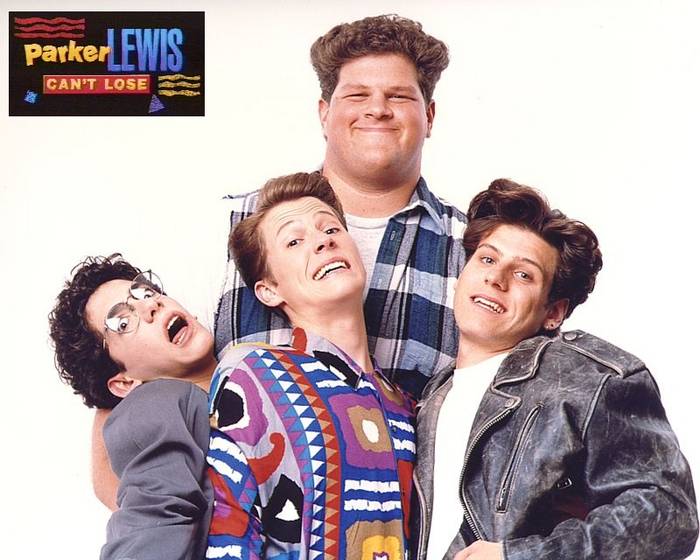
  • Parker Lewis Can't Lose - In the wake of the success of the 1986 movie "Ferris Bueller's Day Off", the Fox TV network debuted a high school comedy series that riffed on the same idea of a student constantly getting one over on the teachers and other antagonists. The difference was that "Parker Lewis Can't Lose" embraced a far more surreal element that saw it teeter on the edge of destroying the fourth wall. As the titular cool guy, Corin Nemec strolled through the halls of Santo Domingo High with his best buds with unshakeable self confidence, a plan for every situation and an endless supply of loud shirts. Every episode brought a new problem - whether it was outwitting the machinations of the Cruella de Vil-like Principal Musso or Parker's own maniacal little sister. There was an almost Chuck Jones cartoon-like quality to the production, with endless sight gags, visual cues and pop culture references (that will seem incredibly outdated by now). Importantly it was one of the first shows that I ever watched on satellite television. Late 1990 was the year that we got a Sky dish after my parents had initially gone with the "squariel" dish  and the five BSB channels - not the first time that my dad backed the loser in a technology race. In a plethora of new imported shows on "Sky Channel", this little comedy stood out as being fresh and different, even if it'a a little cheesy.
  • Dances With Wolves -  Kevin Costner's epic historical western which tells the story of a Union Lieutenant and his relationship with a tribe of Lakota Indians was my favourite film of the year by a wide margin. Although I was already a fan of the genre through exposure to the classics by my parents, I vividly remember going to the cinema with my friends and being blown away (even if the projectionist did get the screen ratio wrong at the beginning so everything was squashed and had to start the reel again). This was also a time where a three hour long movie was rare, which made the whole thing seem even more of an event (the eventual four-hour special edition was even better).  Like "Jaws", I have bought multiple versions over the years in different formats, along with the Oscar-winning soundtrack by John Barry. 
  • Postcards From The Edge - The film version of the late Carrie Fisher's semi-autobiographical novel starring Meryl Streep, Shirley MacLaine and Dennis Quaid is a quality piece of drama. But it's on purely this list because of how much I love the song - "I'm Checkin' Out" - that Meryl's character Suzanne Vale performs in the closing moments. Even if you don't like country music, it's still a fantastic performance:
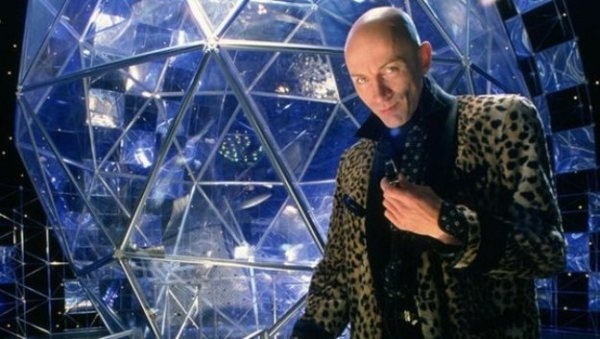
  • The Crystal Maze - The original and best version of the classic puzzle-solving adventure game show with mercurial host Richard O'Brien. The challenge saw teams of contestants travelling across four different "zones" to compete in a series of different mental, physical, skill or 'mystery' games against the clock. Each successful game won a time crystal. These allowed the players a certain amount of time in the "Crystal Dome" where they had to collect as many gold tokens as possible from those blown into the air by gigantic fans. Getting over a certain number of gold tokens won the prize - usually activity days out. O'Brien was a perfect if unconventional host - genial and welcoming but also quick with a deadpan quip and jokes to camera about the contestants stupidity. His presence made the programme hugely successful and I religiously watched every week. After his departure it limped on with Ed Tudor-Pole but it was never the same. However the format is so well remembered and loved that a 2017 revival has just started and there are even two real world version you can take part in. I must get a team together...